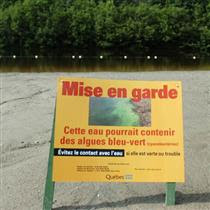
Water scarcity 'now bigger threat than financial crisis'
By 2030, more than half the world's population will live in high-risk areas
By Geoffrey Lean, Environment Editor
March 15, 2009
The Independent
Humanity is facing "water bankruptcy" as a result of a crisis even greater than the financial meltdown now destabilising the global economy, two authoritative new reports show. They add that it is already beginning to take effect, and there will be no way of bailing the earth out of water scarcity.
The two reports – one by the world's foremost international economic forum and the other by 24 United Nations agencies – presage the opening tomorrow of the most important conference on the looming crisis for three years. The World Water Forum, which will be attended by 20,000 people in Istanbul, will hear stark warnings of how half the world's population will be affected by water shortages in just 20 years' time, with millions dying and increasing conflicts over dwindling resources.
A report by the World Economic Forum, which runs the annual Davos meetings of the international business and financial elite, says that lack of water, will "soon tear into various parts of the global economic system" and "start to emerge as a headline geopolitical issue".
It adds: "The financial crisis gives us a stark warning of what can happen if known economic risks are left to fester. We are living in a water 'bubble' as unsustainable and fragile as that which precipitated the collapse in world financial markets. We are now on the verge of bankruptcy in many places with no way of paying the debt back." (...)
The World Water Development Report, compiled by 24 UN agencies under the auspices of Unesco, adds that shortages are already beginning to constrain economic growth in areas as diverse and California, China, Australia, India and Indonesia. The report, which will be published tomorrow, also expects water conflicts to break out in the Middle East, Haiti, Sri Lanka, Colombia and other countries.
"Conflicts about water can occur at all scales," it warns. "Hydrological shocks" brought about by climate change are likely to "increase the risk of major national and international security threats".
dimanche 15 mars 2009


jeudi 12 mars 2009
Une crise mondiale de l'eau se dessine
 Une crise mondiale de l'eau se dessine
François Cardinal
le 12 mars 2009
La Presse
L'humanité est dépendante de l'eau et pourtant, elle représente une menace croissante pour cette fragile ressource. Dans le plus important rapport jamais réalisé sur l'eau, qui sera dévoilé aujourd'hui, l'ONU tire la sonnette d'alarme et en profite pour montrer le Canada du doigt.
Sous l'effet de la surpopulation, de l'augmentation du niveau de vie et des changements climatiques, les réserves d'eau subissent des pressions sans précédent partout sur la planète, ce qui met en péril la paix et la croissance à long terme.
Voilà le cri d'alarme que lancera l'ONU ce matin, à son quartier général de New York, en dévoilant le plus important rapport jamais réalisé sur la situation de l'eau dans le monde.
Obtenu par La Presse, le troisième rapport triennal des Nations unies sur la mise en valeur des ressources en eau se distingue des précédents par son envergure, son caractère militant, mais surtout son ton alarmant. Notons que la coordination du projet a été menée par l'ancien président du BAPE, William J. Cosgrove.
«Il est clair que l'on doit agir de toute urgence pour éviter une crise mondiale de l'eau, écrit d'entrée de jeu le grand patron de l'UNESCO, Koïchiro Matsuura. Malgré le caractère vital de l'eau pour la vie humaine, le secteur est victime d'un manque chronique de soutien politique, d'une mauvaise gouvernance, et de sous-investissement.» PLUS >>>
*******
UN warns of widespread water shortages Constantly rising demand for a finite resource raises risk of political upheaval and economic stagnation over next 20 years, report says
March 12, 2009
Martin Mittelstaedt
Globe and Mail
Martin Mittelstaedt
Globe and Mail
The world faces a bleak future over its dwindling water supplies, with pollution, climate change and rapidly growing populations raising the possibility of widespread shortages, a new report compiled by 24 agencies of the United Nations says.
The warning from the UN is based on one of the most comprehensive assessments the global body has undertaken on the state of the world's fresh water and was commissioned for use at a major international water conference being held next week in Istanbul.
"Today, water management crises are developing in most of the world," the report says, citing a single week in November of 2006 when there were local news reports of shortages in 14 countries, including parts of Canada, the United States and Australia.
The assessment, called World Water Development Report, says that while water supplies are under threat, the demand for water is increasing rapidly because of industrialization, rising living standards and changing diets that include more foods, such as meat, that require larger amounts of water to produce.
"The result is a continuously increasing demand for finite water resources for which there are no substitutes," it says, predicting that by 2030, nearly half of the world's population will be living in areas of high water stress. MORE >>>
lundi 9 mars 2009
Acidification des océans: les coquilles des organismes marins diminuent
Acidification des océans: les coquilles des organismes marins diminuent
le 09 mars 2009
Agence France-Presse
Paris
La Presse
L'acidification des océans, provoquée par l'augmentation des rejets de CO2, provoque «clairement» une perte de calcification d'organismes marins, constate pour la première fois une étude publiée dans la revue Nature Geoscience.
Les chercheurs ont découvert dans l'océan Austral que le poids de la coquille d'animaux marins microscopiques, des foraminifères, était en moyenne 30 à 35% plus légers que celui de ces protozoaires vivant avant l'ère industrielle et retrouvés à l'état de fossiles dans des sédiments.
«Nous avons été capables d'établir une corrélation claire avec l'acidification des océans, mettant ce facteur en évidence par rapport à d'autres», a déclaré à l'AFP le principal auteur de l'étude, William Howard, de l'Université de Tasmanie (Australie).
Selon lui, c'est la première fois que cette liaison a pu être faite dans la nature, alors que jusqu'à présent les scientifiques se basaient sur des expériences menées en laboratoire et des simulations.
Les scientifiques ont en effet constaté parallèlement dans les carottes de sédiments analysées une augmentation du gaz carbonique dans l'atmosphère au cours des derniers 50 000 ans. L'absorption du CO2 par l'océan augmente l'acidité (ph) des eaux. PLUS >>>
 Carbon emissions creating acidic oceans not seen since dinosaurs Chemical change placing 'unprecedented' pressure on marine life and could cause widespread extinctions, warn scientists
David Adam, environment correspondent
March 9, 2009
Guardian
Human pollution is turning the seas into acid so quickly that the coming decades will recreate conditions not seen on Earth since the time of the dinosaurs, scientists will warn today.
The rapid acidification is caused by the massive amounts of carbon dioxide belched from chimneys and exhausts that dissolve in the ocean. The chemical change is placing "unprecedented" pressure on marine life such as shellfish and lobsters and could cause widespread extinctions, the experts say.
The study, by scientists at Bristol University, will be presented at a special three-day summit of climate scientists in Copenhagen, which opens today. The conference is intended to update the science of global warming and to shock politicians into taking action on carbon emissions.
The Bristol scientists cannot talk about their unpublished results until they are announced later today. But a summary of the findings seen by the Guardian predicts "dangerous" levels of ocean acidification and severe consequences for organisms called marine calcifiers, which form chalky shells.
It says: "We find the future rate of surface ocean acidification and environmental pressure on marine calcifiers very likely unprecedented in the past 65 million years." The scientists add that the situation in the deep sea is of even "greater concern". MORE >>>
le 09 mars 2009
Agence France-Presse
Paris
La Presse
L'acidification des océans, provoquée par l'augmentation des rejets de CO2, provoque «clairement» une perte de calcification d'organismes marins, constate pour la première fois une étude publiée dans la revue Nature Geoscience.
Les chercheurs ont découvert dans l'océan Austral que le poids de la coquille d'animaux marins microscopiques, des foraminifères, était en moyenne 30 à 35% plus légers que celui de ces protozoaires vivant avant l'ère industrielle et retrouvés à l'état de fossiles dans des sédiments.
«Nous avons été capables d'établir une corrélation claire avec l'acidification des océans, mettant ce facteur en évidence par rapport à d'autres», a déclaré à l'AFP le principal auteur de l'étude, William Howard, de l'Université de Tasmanie (Australie).
Selon lui, c'est la première fois que cette liaison a pu être faite dans la nature, alors que jusqu'à présent les scientifiques se basaient sur des expériences menées en laboratoire et des simulations.
Les scientifiques ont en effet constaté parallèlement dans les carottes de sédiments analysées une augmentation du gaz carbonique dans l'atmosphère au cours des derniers 50 000 ans. L'absorption du CO2 par l'océan augmente l'acidité (ph) des eaux. PLUS >>>
 Carbon emissions creating acidic oceans not seen since dinosaurs Chemical change placing 'unprecedented' pressure on marine life and could cause widespread extinctions, warn scientists
David Adam, environment correspondent
March 9, 2009
Guardian
Human pollution is turning the seas into acid so quickly that the coming decades will recreate conditions not seen on Earth since the time of the dinosaurs, scientists will warn today.
The rapid acidification is caused by the massive amounts of carbon dioxide belched from chimneys and exhausts that dissolve in the ocean. The chemical change is placing "unprecedented" pressure on marine life such as shellfish and lobsters and could cause widespread extinctions, the experts say.
The study, by scientists at Bristol University, will be presented at a special three-day summit of climate scientists in Copenhagen, which opens today. The conference is intended to update the science of global warming and to shock politicians into taking action on carbon emissions.
The Bristol scientists cannot talk about their unpublished results until they are announced later today. But a summary of the findings seen by the Guardian predicts "dangerous" levels of ocean acidification and severe consequences for organisms called marine calcifiers, which form chalky shells.
It says: "We find the future rate of surface ocean acidification and environmental pressure on marine calcifiers very likely unprecedented in the past 65 million years." The scientists add that the situation in the deep sea is of even "greater concern". MORE >>>
jeudi 5 mars 2009
Municipalité de Lac-Simon refuses $57,000 PAPA grant?
Update - le 6 avril: Municipalité de Lac-Simon announces council meeting that 4 environmental projects (TTL value = $29,300; Lac Simon cost = $5,848) will be presented to CREO for approval:
Direction régionale de l'Outaouais
98, rue Lois
Gatineau (Québec) J8Y 3R7
RE: 8.2: Urbanisme: Programme PAPA - Participation
Assemblée regulière: Lundi le 2 mars 2009
On March 2, 2009 maire Serge Thivierge announced at the monthly council meeting that the Municipalité de Lac-Simon would refuse a $57,000 PAPA grant from the Ministère du Développement durable de l'Environnement et des Parcs.
The grant is available to the municipalities in the MRC Papineau. According to the maire, the funds are being distributed by the MRC Papineau based on municipal evaluations. Apparently the Municipalité de Lac-Simon was entilted to $57,000, out of a total $70,000 grant.
To refuse the provincial grant, in its entirety, is absurd. I hope I simply misunderstood. But I must register a complain; to err on the side of caution. Hence this letter.
Municipalité de Lac-Simon could institute for example:
Moreover, with Cheneville & Saint Andre Avellin getting their drinking water from the Riviere Petite Nation, we have a duty to protect our water commons.
There must be a Responsibility to Protect: Water.
I hope we can rectify this situation. Looking forward to you're feedback.
Sincerely,
Paul Malouf
CC: Ghislain Ménard, directeur général MRC Papineau
8.4 Présentation de projets a la CREO dans le cadre du programme de soutien a la mise en ouevre du plan d'action régional de protection des lacs et des cours d'eau de l'Outaouais 2009-2012
**************
Ministère du Développement durable de l'Environnement et des ParcsDirection régionale de l'Outaouais
98, rue Lois
Gatineau (Québec) J8Y 3R7
RE: 8.2: Urbanisme: Programme PAPA - Participation
Assemblée regulière: Lundi le 2 mars 2009
On March 2, 2009 maire Serge Thivierge announced at the monthly council meeting that the Municipalité de Lac-Simon would refuse a $57,000 PAPA grant from the Ministère du Développement durable de l'Environnement et des Parcs.
The grant is available to the municipalities in the MRC Papineau. According to the maire, the funds are being distributed by the MRC Papineau based on municipal evaluations. Apparently the Municipalité de Lac-Simon was entilted to $57,000, out of a total $70,000 grant.
To refuse the provincial grant, in its entirety, is absurd. I hope I simply misunderstood. But I must register a complain; to err on the side of caution. Hence this letter.
Municipalité de Lac-Simon could institute for example:
- Joint "clean water" ventures with adjacent municipalities whose lakes & rivers drain into Lac Simon, Lac Barriere, Baie L'Ours etc...;
- Reinforce efforts of Madame Dubois & septic system analysis;
- Coordinate project(s) with l’Association des propriétaires du lac Simon ex: shoreline tree planting, "clean water" bulletins etc...; and/or
- Attack the sources of algae in Baie Groulx, Baie Yelle and/or Baie L'Ours.
Moreover, with Cheneville & Saint Andre Avellin getting their drinking water from the Riviere Petite Nation, we have a duty to protect our water commons.
There must be a Responsibility to Protect: Water.
I hope we can rectify this situation. Looking forward to you're feedback.
Sincerely,
Paul Malouf
CC: Ghislain Ménard, directeur général MRC Papineau
jeudi 26 février 2009
CERES group: Water 'more important than oil'
 Water 'more important than oil' businesses told Looming water crisis could unravel world economy without radical action, investors told
Juliette Jowit
Thursday 26 February 2009
Guardian
Dwindling water supplies are a greater risk to businesses than oil running out, a report for investors has warned.
Among the industries most at risk are high-tech companies, especially those using huge quantities of water to manufacture silicon chips; electricity suppliers who use vast amounts of water for cooling; and agriculture, which uses 70% of global freshwater, says the study, commissioned by the powerful CERES group, whose members have $7tn under management. Other high-risk sectors are beverages, clothing, biotechnology and pharmaceuticals, forest products, and metals and mining, it says.
"Water is one of our most critical resources – even more important than oil," says the report, published today . "The impact of water scarcity and declining water on businesses will be far-reaching. We've already seen decreases in companies' water allotments, more stringent regulations [and] higher costs for water."
Droughts "attributable in significant part to climate change" are already causing "acute water shortages" around the world, and pressure on supplies will increase with further global warming and a growing world population, says the report written by the US-based Pacific Institute.
"It is increasingly clear that the era of cheap and easy access to water is ending, posing a potentially greater threat to businesses than the loss of any other natural resource, including fossil fuel resources," it adds. "This is because there are various alternatives for oil, but for many industrial processes, and for human survival itself, there is no substitute for water." (...)
mercredi 25 février 2009
PM Harper: Withdraw Proposed Amendments to NWPA from C-10A
E-mail Prime Minister Harper & your MP and urge them to withdraw the proposed amendments to the Navigable Waters Protection Act (NWPA) from C-10, the Budget Implementation Act.
Dear Prime Minister Harper,
I am writing to you as a Canadian citizen who has serious concerns about the proposed amendments to the Navigable Waters Protection Act (NWPA) and the consequences for marine travel and ocean conservation. Therefore, I am urging you to withdraw the proposed amendments to the Navigable Waters Protection Act from C-10, the Budget Implementation Act.
The proposed changes to the NWPA will have serious impacts on the historic public right to navigate our waterways, our ability to protect our natural environment, the deregulation of protection of navigable waters and the reduction of public transparency and accountability.
We understand the current economic crisis requires urgent action but our prosperity depends on the health of our environment. When we protect public access to waterways in Canada, we are also protecting the natural environment of those waterways. The protection of our oceans and rivers and the rights of the public must not be compromised in the pursuit of short term economic stimulus.
The NWPA is essential federal legislation. There are clearly administrative inefficiencies within the NWPA that need to be corrected but the Budget Implementation Act is not the appropriate way or means to make those changes. Canadians want careful consideration of changes to the NWPA with broad public consultation and meaningful consideration of the heritage right of public navigation. I am urging you to withdraw the proposed changes to the NWPA from Bill C-10 and initiate a process to determine what changes are necessary to both protect the health of our oceans and rivers and address the administrative inefficiencies.
Sincerely,
Paul Malouf
(source: Living Ocean Society)
mardi 24 février 2009
Threats to Watersheds: An Interactive Guide ~ Nature Conservancy

Did you know that deforestation affects an ecosystem's ability to provide clean drinking water to the people who live there? Or that the location of a dam could determine the survival of migratory fish?
The Nature Conservancy’s new interactive feature lets you explore the different threats that have an impact on watersheds around the world—and the strategies the Conservancy is using to address them.
The Nature Conservancy’s new interactive feature lets you explore the different threats that have an impact on watersheds around the world—and the strategies the Conservancy is using to address them.
lundi 23 février 2009
Lakes are important 'sentinels' for climate change
Vital Climate Change Warnings Are Being Ignored, Says Expert
Feb. 23, 2009
ScienceDaily
Canada's inland waters, the countless lakes and reservoirs across the country, are important "sentinels" for climate change and Ottawa and the provinces are ignoring the warnings.
That's the message from University of Alberta biologist David Schindler and colleagues in a paper in the journal, Science.
Schindler is a co-author of Sentinels of Change, which reviewed papers addressing the effects of climate change revealed in numerous long-term studies presented at a conference last September.
In his paper, Schindler highlighted studies that have shown that Canada and the United States will have to rethink plans to use the Laurentian Great Lakes as an emergency water supply if a dramatic shortage befalls North America in the future. Data collected by researchers indicate the water balance is the Laurentian Great Lakes is precarious because it is only renewing itself at the rate of less than one per cent a year.
Schindler and his co-authors also analyze a study involving carbon emissions. "Recent studies show that lakes release very high releases of greenhouse gases to the atmosphere, in many cases higher than the surrounding forests in the same watersheds. This has been missed in climate modeling to date."
Schindler says more inland water studies are needed in Canada because they provide valuable data on water levels, carbon cycles, acid rain and the frequency of forest fires. There are three long-term inland water studies in Canada, all of them in Ontario. Schindler is calling for more funding and expansion of the research program.
Feb. 23, 2009
ScienceDaily
Canada's inland waters, the countless lakes and reservoirs across the country, are important "sentinels" for climate change and Ottawa and the provinces are ignoring the warnings.
That's the message from University of Alberta biologist David Schindler and colleagues in a paper in the journal, Science.
Schindler is a co-author of Sentinels of Change, which reviewed papers addressing the effects of climate change revealed in numerous long-term studies presented at a conference last September.
In his paper, Schindler highlighted studies that have shown that Canada and the United States will have to rethink plans to use the Laurentian Great Lakes as an emergency water supply if a dramatic shortage befalls North America in the future. Data collected by researchers indicate the water balance is the Laurentian Great Lakes is precarious because it is only renewing itself at the rate of less than one per cent a year.
Schindler and his co-authors also analyze a study involving carbon emissions. "Recent studies show that lakes release very high releases of greenhouse gases to the atmosphere, in many cases higher than the surrounding forests in the same watersheds. This has been missed in climate modeling to date."
Schindler says more inland water studies are needed in Canada because they provide valuable data on water levels, carbon cycles, acid rain and the frequency of forest fires. There are three long-term inland water studies in Canada, all of them in Ontario. Schindler is calling for more funding and expansion of the research program.
lundi 16 février 2009
Photo Gallery: Global drought
 In Lake Pillsbury, California, US, a boat sits stranded, truly high and dry. A third year of drought has prompted California state water officials to urge conservation
Photo Gallery Guardian
Days of dust: the impact of global drought
Gallery (22 pictures): Water, the single most vital element for life on earth, is dwindling. From China to California, Australia and Kenya, global drought is having a huge effect. The reasons are simple and familiar – a warming planet and human overexploitation for food and industry. Their effects – denuded landscapes, mass starvation and death – are equally familiar. What is not so certain is a solution
Days of dust: the impact of global drought
Gallery (22 pictures): Water, the single most vital element for life on earth, is dwindling. From China to California, Australia and Kenya, global drought is having a huge effect. The reasons are simple and familiar – a warming planet and human overexploitation for food and industry. Their effects – denuded landscapes, mass starvation and death – are equally familiar. What is not so certain is a solution
samedi 27 décembre 2008
Deficit 2008 & Sécurité Publique
Update le 6 avril: The Municipality of Lac Simon announces in "ordre du jour" that the long term capital expenditures requests for "l'agrandisement de la caserne" have been reduced from $850,000 (December) -> $550,000 (March) -> $460,000 (April).
Ministère de la Sécurité publique
2525, boulevard Laurier, 5e étage
Tour des Laurentides
Québec (Québec) G1V 2L2
RE: 2008 financial results and sécurité publique
M. Jacques P. Dupuis,
On December 22, 2008 the Municipality of Lac Simon had a special council meeting to present their “budget 2009” and their “financial review of 2008”.
The municipality of Lac Simon 2008 operating deficit was $175,500. The 2008 net deficit was reported as $75,500 because of the $100,0000 the municipality took from the previous years’ surplus.
Gross revenues for 2009 are estimated at $2,583,539. Net revenues for 2009 $2,507,989 = ($2,583,539 - $75,500).
Revenues have grown from $1,450,000 (2004), $1,585,651 (2005), $1,692,792 (6.8% increase in 2006), $2,009,820 (10% increase in 2007), $2,388,520 (18.8% increase in 2008).
The $175,000 operating deficit in 2008 was 7.3% of the 2008 budget ($2,388,520).
We suspect that much of the $175,500 operating deficit in 2008 relates to the expenses that fall under the portfolio of the Ministère de la Sécurité publique.
We would argue the following:
“Premier repondeur” program: Since day one, citizens have repeatedly asked questions at council meetings. Questions included: Is there not a provincial subsidy for premier repondeur? If yes, why has the municipality not made a request to provincial authorities? Should not the projected cost of premier repondeur be over $100,000? All inquiries and questions were dismissed by council.
We would argue that the Ministère de la Sécurité publique:
Looking forward to a safe and prosperous 2009.
Thanking you in advance.
Paul Malouf

******************
M. Jacques P. DupuisMinistère de la Sécurité publique
2525, boulevard Laurier, 5e étage
Tour des Laurentides
Québec (Québec) G1V 2L2
RE: 2008 financial results and sécurité publique
M. Jacques P. Dupuis,
On December 22, 2008 the Municipality of Lac Simon had a special council meeting to present their “budget 2009” and their “financial review of 2008”.
The municipality of Lac Simon 2008 operating deficit was $175,500. The 2008 net deficit was reported as $75,500 because of the $100,0000 the municipality took from the previous years’ surplus.
Gross revenues for 2009 are estimated at $2,583,539. Net revenues for 2009 $2,507,989 = ($2,583,539 - $75,500).
Revenues have grown from $1,450,000 (2004), $1,585,651 (2005), $1,692,792 (6.8% increase in 2006), $2,009,820 (10% increase in 2007), $2,388,520 (18.8% increase in 2008).
The $175,000 operating deficit in 2008 was 7.3% of the 2008 budget ($2,388,520).
We suspect that much of the $175,500 operating deficit in 2008 relates to the expenses that fall under the portfolio of the Ministère de la Sécurité publique.
We would argue the following:
- Equipment: Far too many unnecessary fire trucks. (see 2 photos)
- Labor: Excess staff
- Maintenance & training: As a result of initial buying of equipment (2) & hiring of staff (3), there is a corresponding increase in expenses for equipment “maintenance” and labor “training” and hours of work.
- “premier repondeur” program: In 2008 the Municipality of Lac Simon introduced their premier repondeur. The maire & council estimated that total costs would be $20,000.
- Garage expansion: The Municipality of Lac Simon wants to expand the current 6-door firehouse/garage at a projected additional cost of $850,000. 254-10-2008 Règlement ayant pour objet de décréter des travaux d’agrandissement de la caserne incendie, des travaux de construction d’un entrepôt, incluant des travaux de terrassement, l’achat d’un camion citerne et d’un véhicule multi-usage et autorisant un emprunt de 850 000$ pour en payer les coûts.
“Premier repondeur” program: Since day one, citizens have repeatedly asked questions at council meetings. Questions included: Is there not a provincial subsidy for premier repondeur? If yes, why has the municipality not made a request to provincial authorities? Should not the projected cost of premier repondeur be over $100,000? All inquiries and questions were dismissed by council.
We would argue that the Ministère de la Sécurité publique:
- review the Municipality of Lac Simon financial statements of 2008 that relate to Sécurité publique;
- question the necessity of the Municipality of Lac Simon $850,000 long term capital cost plans.
- structure a long term Sécurité publique plan for the Municipality of Lac Simon.
Looking forward to a safe and prosperous 2009.
Thanking you in advance.
Paul Malouf


vendredi 26 décembre 2008
Financials 2008 and Forecasted Budget 2009
Ministre Nathalie Normandeau
Affaires municipales et des Régions
10, rue Pierre-Olivier-Chauveau
Québec (Québec)
G1R 4J3
RE: Municipality of Lac Simon: financials 2008 and forecasted budget 2009
Ministre Nathalie Normandeau,
On December 22, 2008 the Municipality of Lac Simon had a special council meeting to present their “budget 2009” and their “financial review of 2008”. Here are the highlights:
Actual Budget 2008
The municipality of Lac Simon 2008 operating deficit was $175,500. The 2008 net deficit was reported as $75,500. The actual deficit for 2008 would have been $175,500, had it not been for the $100,0000 the municipality took from the previous years’ surplus.
Moreover the $175,000 operating deficit in 2008 was 7.3% of the 2008 budget ($2,388,520).
Budget Forecast 2009
Property taxes 2009
The spending is out of control. The forecasts are deficient. As a result, taxes are increasing 12% (in a recession), even though evaluations are up over 4%. Furthermore, unpaid taxes are approximately $180,000.
Moreover, the Municipality of Lac Simon is projecting future capital costs that include:
Please help us stop the over-spending and place some financial oversight on our municipal officials.
We would argue that the Affaires municipales et des Régions review the Municipality of Lac Simon:
Looking forward to a sound financial future.
Thanking you in advance.
Paul Malouf
Affaires municipales et des Régions
10, rue Pierre-Olivier-Chauveau
Québec (Québec)
G1R 4J3
RE: Municipality of Lac Simon: financials 2008 and forecasted budget 2009
Ministre Nathalie Normandeau,
On December 22, 2008 the Municipality of Lac Simon had a special council meeting to present their “budget 2009” and their “financial review of 2008”. Here are the highlights:
Actual Budget 2008
The municipality of Lac Simon 2008 operating deficit was $175,500. The 2008 net deficit was reported as $75,500. The actual deficit for 2008 would have been $175,500, had it not been for the $100,0000 the municipality took from the previous years’ surplus.
Moreover the $175,000 operating deficit in 2008 was 7.3% of the 2008 budget ($2,388,520).
Budget Forecast 2009
- Gross revenues for 2009 are estimated at $2,583,539. Net revenues for 2009 $2,507,989 = ($2,583,539 - $75,500).
- Revenues have grown from $1,450,000 (2004), $1,585,651 (2005), $1,692,792 (6.8% increase in 2006), $2,009,820 (10% increase in 2007), $2,388,520 (18.8% increase in 2008).
Property taxes 2009
- Evaluations 2009 = $197,243,700 a 4.2% ($7,973,700) increase from $189,270,000 (2008).
- Mill rate 2009 = 0.90423 / $100.00 a 11.97% (0.09673) increase from 0.8075 / $100.00 (2008).
The spending is out of control. The forecasts are deficient. As a result, taxes are increasing 12% (in a recession), even though evaluations are up over 4%. Furthermore, unpaid taxes are approximately $180,000.
Moreover, the Municipality of Lac Simon is projecting future capital costs that include:
- firehouse expansion, at a projected cost of $850,000; and a
- new town hall, at a projected cost of approximately $2,000,000.
Please help us stop the over-spending and place some financial oversight on our municipal officials.
We would argue that the Affaires municipales et des Régions review the Municipality of Lac Simon:
- 2008 financial statements;
- 2009 forecasted budget;
- projected future capital costs.
Looking forward to a sound financial future.
Thanking you in advance.
Paul Malouf
mercredi 24 décembre 2008
A Very Merry Christmas & a Happy New Year
We have accomplished much in 2008!
 Thanks to your generous support in 2008, we celebrated some great conservation commitments and were able to put more energy than ever before into conservation programs and projects.
Together we have
- protected the marshes, forests and beaches of Ile Canard Blanc. It seems there will be no cement ramps on the beach and the development has stopped;
- restricted the travels of the "barge" with the help of Transport Canada;
- protected the very special Lac des Etoiles with our 100 signature petition of Ile Canard Blanc residents;
- conserved several key freshwater streams into Baie L'ours, Lac Barriere and Lac Simon with the help of Environment Quebec;
- reversed the "halte" project parking lot along chemin tour-de-lac with the help of Environment Quebec after Municipality damaged a stream;
- exposed various incidents of e-coli, blue-green algae and pollution in 2007 and 2008;
- publicized various activities such as the July "poker run" with the Minister of Public Security and exposed the August "depotoir" incident with the help of Environment Quebec;
- thanks to the over 800 petition signatures in spring 2008, l’auberge “Evasion” is no longer a "une maison de réinsertion". "Alliance/Cap Espoir" vacated in November!
- helped secure the right to vote for hundreds of cottagers by getting their names on our electoral list for the 2007 referendum & monitored November 2008 by-election.
With your continued support, we will continue to tackle Lac Simon's most pressing conservation challenges, ensuring we protect it for the next generation.
There is much to accomplish in 2009!
From me and everyone that provides pictures, articles and tips that helps put this blog together, we wish you and your family a very Merry Christmas and a Happy New Year.
For our Lac Simon.
Rave on!
Paul Malouf
Lac Simon "One Lake - One Chance"
P.S. Have a happy, and green, New Year!
mardi 23 décembre 2008
~ Financial Update 2008 & 2009 ~
~ Financial Update 2008 & 2009 ~
Actual Budget 2008
- Net Deficit 2008 = $75,500
- Operating Deficit 2008 = $175,500.
- The $175,000 operating deficit in 2008 is 7.3% of the 2008 budget ($2,388,520).
Budget Forecast 2009
- Gross revenues 2009 are $2,583,539.
- Net Revenues 2009 $ 2,507,989 = ($2,583,539 - $75,500)
- Operating Surplus/Deficit: surplus $35,597 (2005), surplus $103,200 (2006), surplus $55,695 (2007), deficit $175,500 (2008)
- Cumulative Surplus (as of December 2007): $383,185
Property taxes 2009
- Evaluations 2009 = $197,243,700 a 4.2% ($7,973,700) increase from $189,270,000 (2008).
- Mill rate 2009 = 0.90423 / $100.00 a 11.97% (0.09673) increase from 0.8075 / $100.00 (2008).
~ special council meeting for Budget 2009 ~
Municipalite de Lac Simon
~ December 22, 2008 ~
Municipalite de Lac Simon
~ December 22, 2008 ~
lundi 8 décembre 2008
Photo Gallery: L'hélicoptère Sortis de L'eau


 *************
Merci pour les photos / Thank you for the photos
vendredi 5 décembre 2008
L'hélicoptère & Les Corps Sont Sortis de L'eau
 Deux morts au lac Simon
 L'hélicoptère et les corps sont sortis de l'eau
Louis-Denis Ebacher
Le Droit
L'hélicoptère qui s'est abîmé dans le lac Simon avec quatre personnes à bord, mercredi soir, a été sorti de l'eau, hier, en fin de journée.
Le petit aéronef Robinson 2007 R-44 de couleur jaune a été retiré des eaux glaciales du lac vers 17h.
Quelques heures plus tôt, vers 13h15, les corps des deux disparus ont été sortis par les plongeurs de la Sûreté du Québec (SQ), à 150 mètres de la berge.
Serge Louis-Seize, propriétaire et pilote de l'hélicoptère, 49 ans, et Léo Blanchet, 63 ans, sont morts noyés en tentant de rejoindre la terre ferme après leur sortie de l'appareil. (...)
******
LAC SIMON
Two men die after copter crashes in frigid Quebec lake
Rotor hit water, survivor says
ANDY BLATCHFORD
The Canadian Press
December 5, 2008
Globe & Mail
MONTREAL -- Their helicopter had just plunged through the darkness into a lake when its four occupants had to endure the sudden shock of hitting the frigid water after their jump from the wreckage.
But only two survived the frantic swim. The two other men perished trying to make it to shore 150 metres away.
The bodies of pilot Serge Louis-Seize, 49, and Leo Blanchet, 63, were recovered by Quebec provincial police divers from the depths of Lac Simon yesterday.
The chopper's two other passengers fought off the sting of one-degree water after Wednesday evening's accident in Quebec cottage country northeast of Ottawa.
"The four of them got out of the helicopter and they swam for the side of the lake, but just two [of them] arrived on shore," said provincial police spokeswoman Melanie Larouche. (...)
*************************
Photos from 2007 & 2008
 Helicopter & floating dock, summer 2007
 Flying above floating dock, summer 2007
 Flying along shoreline (just left of red roof) spring 2008
 Flying along shoreline spring 2008
 Flying over municipal quai, summer 2008
jeudi 4 décembre 2008
Un hélicoptère s’abîme dans le lac Simon
Breaking News
Un hélicoptère s’abîme dans le lac Simon
December 3, 2008
December 3, 2008
LCN
Un hélicoptère s'est écrasé dans le lac Simon, en Outaouais, en début de soirée.
Deux personnes qui se trouvaient à bord de l'appareil seraient portées manquantes.
Deux autres passagers auraient été rescapés.
On ignore, pour l'instant, les causes de cet accident.
Canwest News Service
Published: Thursday, December 04, 2008
CHENEVILLE, Que. - Two people are missing after a helicopter crashed in a Quebec lake outside Ottawa Wednesday night.
Another two passengers safely made it to shore after the helicopter crashed at about 7:40 p.m. Wednesday into Lac Simon, about 95 kilometres northeast of Ottawa, near the Quebec community of Cheneville.
The search is ongoing, with police marine units and aerial searchers working to locate the two missing passengers from the Robinson 44 helicopter.
"A Griffin helicopter from CFB Trenton arrived on scene, but unfortunately the weather deteriorated and they were unable to participate Wednesday night, but we're getting them back up there (Thursday) morning," said Capt. Paul Spaleta of the rescue co-ordination centre at CFB Trenton.
Last Updated: Thursday, December 4, 2008 | 7:43 AM ET
CBC
Two people are missing after a helicopter crashed into a lake in Western Quebec Wednesday night.
Quebec provincial police said the helicopter, carrying four people, crashed into Lac Simon, about 75 kilometres northeast of Ottawa.
Two people managed to swim to shore and were taken to hospital suffering from hypothermia, but two others are still missing.
Police divers were expected to search the lake on Thursday.
A Griffon helicopter from CFB Trenton in eastern Ontario has joined the search for the two others.
Lac Simon is the site of plane crash 50 years ago that killed four hunters. The aircraft and the bodies of the hunters were recovered from the bottom of the lake in May.
Outaouais: un hélicoptère s'est écrasé dans le lac Simon, mercredi
Il y a 3 heures
La Presse
MONTREAL — Un hélicoptère est tombé en début de soirée dans le lac Simon, en Outaouais, à quelques centaines de mètres de la rive à la hauteur du chemin de la baie Yelle, près de la municipalité de Chénéville.
Deux personnes qui étaient à bord ont été rescapées, mais deux autres manquent toujours à l'appel.
Les services d'urgence ont été appelés par un témoin qui a vu l'appareil s'abimer dans le lac. Les deux rescapés ont pu regagner la rive à la nage et ont été aidés par des personnes qui se trouvaient à proximité. Ils ont été transportés à l'hôpital, souffrant d'hypothermie.
La Sûreté du Québec a précisé que le secteur a été survolé par un appareil des Forces armées canadiennes après l'accident mercredi soir, mais qu'on est toujours sans nouvelle des deux personnes manquantes.
Des plongeurs de la SQ sont sur les lieux ce jeudi matin afin de poursuivre les recherches. Un appareil des Forces armées canadiennes a également été dépêché pour survoler de nouveau le secteur.
C'est au lac Simon qu'en juin dernier des plongeurs ont ramené à la surface un hydravion qui y était tombé en novembre 1957. Les restes des corps des trois occupants, Tony Chivazza, Philippe Ouimet et Louis Hamel, ont été remontés.
Deux personnes ont possiblement perdu la vie dans un accident d'hélicoptère, hier, dans le lac Simon.
Un hélicoptère s'abîme dans le lac Simon
Louis-Denis Ebacher
Publié le 04 décembre 2008 à 08h33
Le Droit
La Sûreté du Québec (SQ) a reçu un appel concernant l'aéronef vers 18 h 15, hier. Un témoin a aperçu l'hélicoptère descendre de façon inhabituelle jusque dans les eaux du lac Simon, dans la Petite-Nation. «Deux personnes manquent toujours à l'appel, a indiqué en fin de soirée la porte-parole de la SQ, Joyce Kemp. On parle aussi de deux rescapés.»
Les informations tombaient au compte-gouttes, quelques heures après le drame. Les familles des victimes n'avaient pas toutes été informées de ce qui venait de se passer.
Le lac Simon est déjà connu pour une tragédie semblable survenue le 21 novembre 1957. Ce jour-là, un hydravion de type SeeBee sombrait au fond du même lac avec quatre personnes à bord.
Les victimes avaient toutes perdu la vie en revenant d'un voyage de chasse. L'épave a été repêchée en mai dernier par la SQ, aidée par des plongeurs amateurs ayant découvert la carcasse de l'appareil.
Deux hommes rescapés et deux autres disparus
le 4 décembre 2008 à 11:28
le Petite Nation
Les plongeurs recherchent toujours l’hélicoptère provenant de Sainte-Anne-des-Plaines qui a plongé dans le lac Simon hier soir vers 18h.
Deux corps manquent toujours à l’appel. Lors de l’écrasement, les quatre passagers sont sortis de l’appareil et ont tenté d’atteindre la rive.
Deux d’entre eux ont réussi à sortir de l’eau. L’un a été aidé par des témoins de l’accident. Ces deux hommes âgés de 33 ans et 48 ans ont été transportés d’urgence à l’hôpital de Buckingham. L’un d’entre eux a obtenu son congé alors que l’autre se trouve dans un état stable. (...)
 Divers pull 2 bodies from Quebec lake after helicopter crash
Last Updated: Thursday, December 4, 2008 | 1:32 PM ET
CBC
Police have recovered the bodies of two Montreal-area men missing after a helicopter carrying four people crashed into a lake in western Quebec on Wednesday night.
Quebec provincial police divers from Montreal pulled the bodies of the 49-year-old pilot, Serge Louis-Seize, and a 63-year-old Montreal man from Lac Simon, about 75 kilometres northeast of Ottawa, Thursday morning. A 33-year-old man from Blainville and the pilot's brother, 48-year-old Mario Louis-Seize survived the crash.
The aircraft went down at about 6 p.m. Wednesday, entering the lake about 50 metres from shore, where the water was about 12 metres deep, police said. (...)
 Mario Louis-Seize continued and managed to crawl up onto the shore. A witness brought him to a nearby cottage and put him in a warm bath, he said. Another cottager took his boat out onto the water and rescued the 33-year-old contractor who had come along to help work on the cottage owned by Serge Louis-Seize. The contractor's 63-year-old father-in-law did not make it.
The two survivors were sent to hospital in Buckingham to be treated for hypothermia, police said.
Police investigators did not yet know whether the snowy, windy weather or a mechanical problem was to blame for the crash, Quebec provincial police officer Melanie Larouche said Thursday.
On Thursday morning, relatives of the missing men huddled on the shore in the cold rain, weeping as divers took to the water. (...)
Two men die, two survive Quebec helicopter crash
Andy Blatchford
The Canadian Press
December 4, 2008 at 5:53 PM EST
Globe & Mail
MONTREAL — Their helicopter had just plunged through the darkness into a lake when its four occupants had to endure the sudden shock of hitting the frigid water after their jump from the wreckage.
But only two survived the frantic swim. The two other men perished in their attempt to make it to shore 150 metres away.
The bodies of pilot Serge Louis-Seize, 49, and Leo Blanchet, 63, were recovered by Quebec provincial police divers from the frosty depths of Lac Simon on Thursday. (...)
Un hélicoptère s'est écrasé dans le lac Simon, en Outaouais, en début de soirée.
Deux personnes qui se trouvaient à bord de l'appareil seraient portées manquantes.
Deux autres passagers auraient été rescapés.
On ignore, pour l'instant, les causes de cet accident.
******
Two missing after Que. helicopter crashCanwest News Service
Published: Thursday, December 04, 2008
CHENEVILLE, Que. - Two people are missing after a helicopter crashed in a Quebec lake outside Ottawa Wednesday night.
Another two passengers safely made it to shore after the helicopter crashed at about 7:40 p.m. Wednesday into Lac Simon, about 95 kilometres northeast of Ottawa, near the Quebec community of Cheneville.
The search is ongoing, with police marine units and aerial searchers working to locate the two missing passengers from the Robinson 44 helicopter.
"A Griffin helicopter from CFB Trenton arrived on scene, but unfortunately the weather deteriorated and they were unable to participate Wednesday night, but we're getting them back up there (Thursday) morning," said Capt. Paul Spaleta of the rescue co-ordination centre at CFB Trenton.
******
2 missing after Que. helicopter crashLast Updated: Thursday, December 4, 2008 | 7:43 AM ET
CBC
Two people are missing after a helicopter crashed into a lake in Western Quebec Wednesday night.
Quebec provincial police said the helicopter, carrying four people, crashed into Lac Simon, about 75 kilometres northeast of Ottawa.
Two people managed to swim to shore and were taken to hospital suffering from hypothermia, but two others are still missing.
Police divers were expected to search the lake on Thursday.
A Griffon helicopter from CFB Trenton in eastern Ontario has joined the search for the two others.
Lac Simon is the site of plane crash 50 years ago that killed four hunters. The aircraft and the bodies of the hunters were recovered from the bottom of the lake in May.
******
Outaouais: un hélicoptère s'est écrasé dans le lac Simon, mercredi
Il y a 3 heures
La Presse
MONTREAL — Un hélicoptère est tombé en début de soirée dans le lac Simon, en Outaouais, à quelques centaines de mètres de la rive à la hauteur du chemin de la baie Yelle, près de la municipalité de Chénéville.
Deux personnes qui étaient à bord ont été rescapées, mais deux autres manquent toujours à l'appel.
Les services d'urgence ont été appelés par un témoin qui a vu l'appareil s'abimer dans le lac. Les deux rescapés ont pu regagner la rive à la nage et ont été aidés par des personnes qui se trouvaient à proximité. Ils ont été transportés à l'hôpital, souffrant d'hypothermie.
La Sûreté du Québec a précisé que le secteur a été survolé par un appareil des Forces armées canadiennes après l'accident mercredi soir, mais qu'on est toujours sans nouvelle des deux personnes manquantes.
Des plongeurs de la SQ sont sur les lieux ce jeudi matin afin de poursuivre les recherches. Un appareil des Forces armées canadiennes a également été dépêché pour survoler de nouveau le secteur.
C'est au lac Simon qu'en juin dernier des plongeurs ont ramené à la surface un hydravion qui y était tombé en novembre 1957. Les restes des corps des trois occupants, Tony Chivazza, Philippe Ouimet et Louis Hamel, ont été remontés.
Deux personnes ont possiblement perdu la vie dans un accident d'hélicoptère, hier, dans le lac Simon.
*******
Un hélicoptère s'abîme dans le lac Simon
Louis-Denis Ebacher
Publié le 04 décembre 2008 à 08h33
Le Droit
La Sûreté du Québec (SQ) a reçu un appel concernant l'aéronef vers 18 h 15, hier. Un témoin a aperçu l'hélicoptère descendre de façon inhabituelle jusque dans les eaux du lac Simon, dans la Petite-Nation. «Deux personnes manquent toujours à l'appel, a indiqué en fin de soirée la porte-parole de la SQ, Joyce Kemp. On parle aussi de deux rescapés.»
Les informations tombaient au compte-gouttes, quelques heures après le drame. Les familles des victimes n'avaient pas toutes été informées de ce qui venait de se passer.
Le lac Simon est déjà connu pour une tragédie semblable survenue le 21 novembre 1957. Ce jour-là, un hydravion de type SeeBee sombrait au fond du même lac avec quatre personnes à bord.
Les victimes avaient toutes perdu la vie en revenant d'un voyage de chasse. L'épave a été repêchée en mai dernier par la SQ, aidée par des plongeurs amateurs ayant découvert la carcasse de l'appareil.
*******
Les plongeurs recherchent l’hélicoptère à Lac-SimonDeux hommes rescapés et deux autres disparus
le 4 décembre 2008 à 11:28
le Petite Nation
Les plongeurs recherchent toujours l’hélicoptère provenant de Sainte-Anne-des-Plaines qui a plongé dans le lac Simon hier soir vers 18h.
Deux corps manquent toujours à l’appel. Lors de l’écrasement, les quatre passagers sont sortis de l’appareil et ont tenté d’atteindre la rive.
Deux d’entre eux ont réussi à sortir de l’eau. L’un a été aidé par des témoins de l’accident. Ces deux hommes âgés de 33 ans et 48 ans ont été transportés d’urgence à l’hôpital de Buckingham. L’un d’entre eux a obtenu son congé alors que l’autre se trouve dans un état stable. (...)
*******
 A Robinson R44 helicopter similar to this one crashed in Lac-Simon, Que., Wednesday night. Two people survived the crash and two are still missing.
Two missing after helicopter crash on Lac Simon
DECEMBER 4, 2008
Ottawa Citizen
OTTAWA — Surete du Quebec divers started the search Thursday morning for two people from the Montreal area who have been missing since their helicopter crashed into Lac Simon Wednesday night.
Two others swam to safety after the crash, which was reported around 6 p.m. Wednesday.
Police say the missing includes the 50-year-old pilot, who owned the Robinson R44 helicopter and had a cottage in the area. A 63-year-old passenger has also not been seen.
Surete du Quebec say the four people in the helicopter were returning to the cottage from Sainte Anne des Plaines, north of Montreal, which they had left at around 5:30 p.m. (...)
 A Robinson R44 helicopter similar to this one crashed in Lac-Simon, Que., Wednesday night. Two people survived the crash and two are still missing.
Photograph by : AFP/ Getty Images
Two missing after helicopter crash on Lac Simon
DECEMBER 4, 2008
Ottawa Citizen
OTTAWA — Surete du Quebec divers started the search Thursday morning for two people from the Montreal area who have been missing since their helicopter crashed into Lac Simon Wednesday night.
Two others swam to safety after the crash, which was reported around 6 p.m. Wednesday.
Police say the missing includes the 50-year-old pilot, who owned the Robinson R44 helicopter and had a cottage in the area. A 63-year-old passenger has also not been seen.
Surete du Quebec say the four people in the helicopter were returning to the cottage from Sainte Anne des Plaines, north of Montreal, which they had left at around 5:30 p.m. (...)
*******
 Divers pull 2 bodies from Quebec lake after helicopter crash
Last Updated: Thursday, December 4, 2008 | 1:32 PM ET
CBC
Police have recovered the bodies of two Montreal-area men missing after a helicopter carrying four people crashed into a lake in western Quebec on Wednesday night.
Quebec provincial police divers from Montreal pulled the bodies of the 49-year-old pilot, Serge Louis-Seize, and a 63-year-old Montreal man from Lac Simon, about 75 kilometres northeast of Ottawa, Thursday morning. A 33-year-old man from Blainville and the pilot's brother, 48-year-old Mario Louis-Seize survived the crash.
The aircraft went down at about 6 p.m. Wednesday, entering the lake about 50 metres from shore, where the water was about 12 metres deep, police said. (...)
 Mario Louis-Seize continued and managed to crawl up onto the shore. A witness brought him to a nearby cottage and put him in a warm bath, he said. Another cottager took his boat out onto the water and rescued the 33-year-old contractor who had come along to help work on the cottage owned by Serge Louis-Seize. The contractor's 63-year-old father-in-law did not make it.
The two survivors were sent to hospital in Buckingham to be treated for hypothermia, police said.
Police investigators did not yet know whether the snowy, windy weather or a mechanical problem was to blame for the crash, Quebec provincial police officer Melanie Larouche said Thursday.
On Thursday morning, relatives of the missing men huddled on the shore in the cold rain, weeping as divers took to the water. (...)
*******
Two men die, two survive Quebec helicopter crash
Andy Blatchford
The Canadian Press
December 4, 2008 at 5:53 PM EST
Globe & Mail
MONTREAL — Their helicopter had just plunged through the darkness into a lake when its four occupants had to endure the sudden shock of hitting the frigid water after their jump from the wreckage.
But only two survived the frantic swim. The two other men perished in their attempt to make it to shore 150 metres away.
The bodies of pilot Serge Louis-Seize, 49, and Leo Blanchet, 63, were recovered by Quebec provincial police divers from the frosty depths of Lac Simon on Thursday. (...)
vendredi 28 novembre 2008
Canadian lakes: Drop in Calcium Levels?
ENVIRONMENT
Canadian lakes suffering from aquatic version of osteoporosis
MARTIN MITTELSTAEDT
ENVIRONMENT REPORTER
November 28, 2008
Globe & Mail
Scientists say they have found lakes in Canada that are losing some of the calcium dissolved in their waters, a condition they're likening to an aquatic version of osteoporosis.
The drop in calcium levels is being attributed to the effects of acid rain and logging, which together have depleted the element in the soil around lakes, reducing the amount that is in runoff and available for aquatic life.
The finding of a new threat to the lakes has potentially far-reaching consequences. Many species depend on abundant levels of calcium, a key nutrient used in nature to build the structure of living things, everything from the shells of birds' eggs to the skeletons of animals.
A paper outlining the discovery, made by a team of scientists from Queen's and York universities and the federal and Ontario governments, appeared in Science yesterday. The research was based on sampling conducted at 770 lakes, of which 60 per cent had calcium amounts near or below levels that harm aquatic life.
The lakes studied were primarily in Ontario's Canadian Shield region, suggesting that tens of thousands of other water bodies across the country may be similarly affected, along with many in the northeastern United States and Scandinavia, areas also sensitive to the affects of acid rain.
"We call it aquatic osteoporosis," said John Smol, one of the researchers on the project and a biology professor at Queen's University in Kingston.
Dr. Smol said he is worried about the health of ecosystems around lakes because "everything requires calcium."
The Ontario lakes were in five areas: the Muskoka region, around Sudbury, Sault Ste. Marie, Algonquin Park and Kenora. The scientists also looked at one lake in Nova Scotia and another in New York State.
Returning calcium concentrations in lakes to healthy levels will likely require further reductions in emissions that cause acid rain - primarily sulphur dioxide and nitrogen oxides from coal-fired power plants, metal smelters and cars - along with changes in logging practices, he said.
Under previously implemented pollution-control plans, emissions of sulphur dioxide in Eastern Canada fell by 63 per cent from 1980 to 2001, according to Environment Canada figures. As a consequence, acidity in many lakes has dropped to more normal readings, but the new findings suggests that even this massive emissions cut hasn't been enough to fully mitigate the damage from acid rain. The researchers believe the sharp drop in calcium has been under way for decades, and began in some areas as early as the 1970s.
When acid rain falls on soil, it quickly leaches out the calcium, and eventually exhausts the dirt's stores of the element, leaving little available to be washed into lakes. In the initial period of acid rain deposition, this effect temporarily increases the amount of calcium entering the lakes, but once the stores of the element are depleted, levels plunge.
Logging is also a problem because trees contain calcium they draw from the soil. When trees are cut and removed, their calcium is taken from the ecosystem. The calcium in uncut forests is returned to the soil when trees fall and decay.
The scientists were able to determine that calcium levels have fallen sharply by studying populations of a water flea called daphnia.
These water fleas are highly sensitive to calcium, and can't reproduce if amounts fall too low. The key level is a water concentration at or below 1.5 parts per million, which causes populations to crash.
Loss of the water fleas is a huge blow to life in the lakes because the creatures are a crucial component of the aquatic food web. They eat algae, and then become food for fish.
"Once calcium declines below a certain threshold, some keystone species can no longer reproduce," said Adam Jeziorski, lead author of the study and a Queen's PhD candidate. "These species and other organisms that feed on them are endangered."
Fish, crayfish and mollusks also have relatively high calcium needs.
The scientists were able to surmise the levels of calcium in the lakes over the past 200 years by looking at the remains of the fossils of water fleas in the mud at the bottom of lakes.
A mineral vital to marine life:
Calcium levels in forests and lakes in the Canadian Shield were believed to be relatively stable since the last ice age ended 12,000 years ago. But acid rain and logging has caused amounts to plunge.
HEALTHY ECOSYSTEM
Calcium levels are fairly constant
WHEN ACID RAIN OCCURS
Two things happen in sequence
Canadian lakes suffering from aquatic version of osteoporosis
MARTIN MITTELSTAEDT
ENVIRONMENT REPORTER
November 28, 2008
Globe & Mail
Scientists say they have found lakes in Canada that are losing some of the calcium dissolved in their waters, a condition they're likening to an aquatic version of osteoporosis.
The drop in calcium levels is being attributed to the effects of acid rain and logging, which together have depleted the element in the soil around lakes, reducing the amount that is in runoff and available for aquatic life.
The finding of a new threat to the lakes has potentially far-reaching consequences. Many species depend on abundant levels of calcium, a key nutrient used in nature to build the structure of living things, everything from the shells of birds' eggs to the skeletons of animals.
A paper outlining the discovery, made by a team of scientists from Queen's and York universities and the federal and Ontario governments, appeared in Science yesterday. The research was based on sampling conducted at 770 lakes, of which 60 per cent had calcium amounts near or below levels that harm aquatic life.
The lakes studied were primarily in Ontario's Canadian Shield region, suggesting that tens of thousands of other water bodies across the country may be similarly affected, along with many in the northeastern United States and Scandinavia, areas also sensitive to the affects of acid rain.
"We call it aquatic osteoporosis," said John Smol, one of the researchers on the project and a biology professor at Queen's University in Kingston.
Dr. Smol said he is worried about the health of ecosystems around lakes because "everything requires calcium."
The Ontario lakes were in five areas: the Muskoka region, around Sudbury, Sault Ste. Marie, Algonquin Park and Kenora. The scientists also looked at one lake in Nova Scotia and another in New York State.
Returning calcium concentrations in lakes to healthy levels will likely require further reductions in emissions that cause acid rain - primarily sulphur dioxide and nitrogen oxides from coal-fired power plants, metal smelters and cars - along with changes in logging practices, he said.
Under previously implemented pollution-control plans, emissions of sulphur dioxide in Eastern Canada fell by 63 per cent from 1980 to 2001, according to Environment Canada figures. As a consequence, acidity in many lakes has dropped to more normal readings, but the new findings suggests that even this massive emissions cut hasn't been enough to fully mitigate the damage from acid rain. The researchers believe the sharp drop in calcium has been under way for decades, and began in some areas as early as the 1970s.
When acid rain falls on soil, it quickly leaches out the calcium, and eventually exhausts the dirt's stores of the element, leaving little available to be washed into lakes. In the initial period of acid rain deposition, this effect temporarily increases the amount of calcium entering the lakes, but once the stores of the element are depleted, levels plunge.
Logging is also a problem because trees contain calcium they draw from the soil. When trees are cut and removed, their calcium is taken from the ecosystem. The calcium in uncut forests is returned to the soil when trees fall and decay.
The scientists were able to determine that calcium levels have fallen sharply by studying populations of a water flea called daphnia.
These water fleas are highly sensitive to calcium, and can't reproduce if amounts fall too low. The key level is a water concentration at or below 1.5 parts per million, which causes populations to crash.
Loss of the water fleas is a huge blow to life in the lakes because the creatures are a crucial component of the aquatic food web. They eat algae, and then become food for fish.
"Once calcium declines below a certain threshold, some keystone species can no longer reproduce," said Adam Jeziorski, lead author of the study and a Queen's PhD candidate. "These species and other organisms that feed on them are endangered."
Fish, crayfish and mollusks also have relatively high calcium needs.
The scientists were able to surmise the levels of calcium in the lakes over the past 200 years by looking at the remains of the fossils of water fleas in the mud at the bottom of lakes.
A mineral vital to marine life:
Calcium levels in forests and lakes in the Canadian Shield were believed to be relatively stable since the last ice age ended 12,000 years ago. But acid rain and logging has caused amounts to plunge.
HEALTHY ECOSYSTEM
Calcium levels are fairly constant
- Calcium gets into the soil through the weathering of rocks.
- Some of it is taken up by trees. When trees rot, the calcium is returned to the soil.
- Some is washed from the land into a lake, where it is taken up by water fleas (not really fleas), which in turn are eaten by water mites and phantom midge larvae.
- Water in the lake flows to the sea, but its calcium is constantly being replenished from soil runoff.
WHEN ACID RAIN OCCURS
Two things happen in sequence
- Acid rain leaches calcium out of the soil. It is washed into the lake where it temporarily increases such levels. As more acid rain falls, calcium levels decline there as well.
- Logging removes calcium absorbed in trees from the ecosystem.
- As calcium in the lake is reduced, the population of algae-eating water fleas plunges.
lundi 10 novembre 2008
Route 321 Development: Stream damaged? Bog Next?
Route 321 Development
Pond damaged? Stream Disappeared?
Is the Bog Next?
Is the Bog Next?
 Looking East: Land clearing along route 321; just outside from Cheneville
 Looking West
Looking NorthWest
 Those pesky trees, always in the way
 Those pesky trees, always in the way
 More land clearing
 Land clearing meets disappearing grasslands
Has a local eco system (Pond & Stream) been Damaged?

Has a pond been damaged?
 Has a stream been damaged?
 Has a stream been damaged?
 Has a stream been damaged?
Is this Bog next? In the distance: track descends toward cluster of trees that surround bog


 In the distance: track descends toward cluster of trees that surround bog

dimanche 9 novembre 2008
Elections Partialles 2008
Update: 409 votes cast. Claude Pigeon 217; Muguette Tremblay 151; Yolande Masse 32
Elections Partialles 2008Vote anticipation: le 2 novembre 2008, 12h00 - 20h00
Jour du scrutin: le 9 novembre 2008, 10h00 - 20h00
!!!! cliquer sur l'anounce pour lire !!!!

samedi 8 novembre 2008
Assemblee Publique de Consultations! Octobre 29, 2008
MUNICIPALITÉ DE LAC-SIMON
Assemblee Publique de Consultations: Mecredi Octobre 29, 2008
???? pourquoi pas le weekend ????
AJOUTER: Assemblee Publique de Consultations: Samedi Novembre 8, 2008
Anounce dans le Petite Nation
 !!!! cliquer sur l'anounce pour lire !!!!
Séance régulière du 6 octobre 2008
???? pourquoi pas le weekend ????
AJOUTER: Assemblee Publique de Consultations: Samedi Novembre 8, 2008
Anounce dans le Petite Nation
 !!!! cliquer sur l'anounce pour lire !!!!
Séance régulière du 6 octobre 2008
256-10-2008 Règlement amendant le Plan d’urbanisme règlement numéro «U-8» afin de mieux protéger l’environnement du lac Blais. («U-8-01»).
257-10-2008 Règlement de concordance amendant le Plan d’urbanisme règlement numéro «U-8» afin d’assurer sa conformité au règlement 091-2007 de la MRC lequel modifie le schéma d’aménagement révisé de la MRC Papineau et vise la zone agricole. («U-8-02»)
258-10-2008 Règlement amendant le règlement sur les Permis et certificats numéro «U-1» afin de préciser des normes concernant le lotissement, les espaces verts, l’implantation des roulottes de camping et les installations d’alimentation et d’évacuation des eaux. («U-1-02»)
259-10-2008 Règlement de concordance amendant le règlement sur les Permis et certificats numéro «U-1» afin d’assurer sa conformité au règlement 091-2007 de la MRC lequel modifie le schéma d’aménagement révisé de la MRC Papineau et vise la zone agricole. («U-1-03»)
260-10-2008 Règlement amendant à nouveau le règlement de Zonage numéro «U-2» afin d’améliorer la gestion du territoire. («U-2-11»)
261-10-2008 Règlement amendant à nouveau le règlement de Zonage numéro «U-2» afin de mieux protéger le lac Blais, d’introduire de nouvelles normes quant aux espaces verts et de corriger certaines dispositions du règlement actuel. («U-2-12»)
262-10-2008 Règlement de concordance amendant le règlement de Zonage numéro «U-2» afin d’assurer sa conformité au règlement 091-2007 de la MRC lequel modifie le schéma d’aménagement révisé de la MRC Papineau et vise la zone agricole. («U-2-13»)
263-10-2008 Règlement amendant le règlement de Lotissement numéro «U-3» afin de définir les normes applicables favorisant l’établissement, le maintien, et l’amélioration de parcs et de terrains de jeux et la préservation d’espaces naturels. («U-3-02»)
264-10-2008 Règlement amendant le règlement de Lotissement numéro «U-3» afin de mieux contrôler la planification du réseau routier. («U-3-03»).
265-10-2008 Règlement amendant le règlement de Lotissement numéro «U-3» afin de réduire la densité d’occupation du sol et de mieux protéger l’environnement. («U-3-04»).
266-10-2008 Règlement amendant le règlement de Construction numéro «U-4» afin de permettre l’installation d’antennes paraboliques. («U-4-02»).
267-10-2008 Règlement de concordance amendant le règlement sur les Dérogations mineures numéro «U-6» afin d’assurer sa conformité au règlement 091-2007 de la MRC lequel modifie le schéma d’aménagement révisé de la MRC Papineau et vise la zone agricole. («U-6-01»).
84-04-2008 Adoption d’un premier projet de règlement P-U-2000-1-2008 modifiant le règlement concernant le Plan d’Urbanisme numéro P-U-2000 afin de se conformer à la modification du schéma d’aménagement de la MRC Papineau et d’introduire les nouvelles affectations agricoles et adoptant la carte du plan d’urbanisme modifié en conséquence.
CONSIDÉRANT que la MRC a modifié le schéma régional en rapport avec les affectations agricoles;
CONSIDÉRANT que la municipalité doit se conformer aux dispositions du schéma;
Il est proposé par Monsieur le Conseiller Jean-Guy Maillé
Appuyé par Monsieur le conseiller Don Saliba
ET RÉSOLU
QUE le conseil adopte le premier projet de règlement P-U-2000-1-2008 modifiant le règlement sur le plan d’urbanisme numéro P-U-2000 afin de se conformer à la modification du schéma d’aménagement de la MRC Papineau et d’introduire les nouvelles affectations agricoles et adoptant la carte du plan d’urbanisme modifiée en conséquence tel que soumis.
Adoptée à l’unanimité
READ/ A LIRE
Anounce dans le Petite Nation
+
Séance régulière du 6 octobre 2008
+
Séance régulière du 7 avril 2008
+
l'information donner au publique par le municipalité
le soiree de 6 Octobre & 7 Avril aussi!
Anounce dans le Petite Nation
+
Séance régulière du 6 octobre 2008
+
Séance régulière du 7 avril 2008
+
l'information donner au publique par le municipalité
le soiree de 6 Octobre & 7 Avril aussi!
lundi 3 novembre 2008
Conference Board of Canada: Canada an environmental slouch
"To improve its overall performance, Canada must promote economic growth without further degrading the environment, partly by encouraging more sustainable consumption."
Canada an environmental slouch, study says
Mon Nov 3, 2008
Reuters
TORONTO (Reuters) - Canada's environmental record is among the worst in the industrialized world, due in part to its poor performance fighting global warming, according to a report from the Conference Board of Canada on Monday.
Canada placed 15th among 17 peers, beating only Australia and the United States. Greenhouse gas emissions, high garbage production, and rampant overuse of fresh water were its biggest environmental problems.
"Without serious attention to environmental sustainability, Canada puts its society and its quality of life at risk," the independent research organization said in the report. MORE >>>

samedi 25 octobre 2008
Toward a Greener Sustainable Lac-Simon?
After reading the first paragraphs of this article, I could not help but think that the different colored arrows (left) represent the various proposed developments (Ile Canard Blanc, Baie L'ours, Rang 4) and thinking of the municipality of Lac-Simon. - Paul
 Toward a greener economy
Scientists seek a more sustainable model for growth
By Moises Velasquez-Manoff| Staff writer
October 15, 2008 edition
The Christian Science Monitor
Market bubbles occur when goods are traded at prices that greatly exceed real value. They burst when they grow so bloated that they become unstable. The current economic turmoil, widely viewed as the worst since 1929, is one example of what can happen when the difference between market value and actual value becomes too great.
Environmentally minded economists have long warned that equally burstable ecological bubbles can occur if humanity lives beyond earth’s capacity to regenerate. The problem, they say, is that we’re addicted to economic growth. Mainstream economics assumes that the economy, the engine of modern civilization, can grow perpetually.
But if growth means ever-increasing consumption of natural resources (and it has, since the start of the Industrial Revolution 250 years ago), then it can’t continue indefinitely. Earth and its resources are finite.
Herman Daly, an economist at the University of Maryland’s School of Public Policy in College Park, says that humanity is already at or beyond the point where economic growth is counterproductive, where the environmental and social costs more than cancel the gains.
“So-called ‘economic’ growth already has become uneconomic,” Professor Daly stated in a talk last spring. “The growth economy is failing.”
For some time, Daly and others have called for a rethinking and restructuring of our economy before nature restructures it for us. The notion of perpetual economic growth warrants scrutiny before it drives us over a cliff, they argue. The science of economics must be overhauled to better account for earth’s physical realities. Civilization won’t have to stop in its tracks, just shift emphasis, says Daly. The “steady state economy” he foresees emphasizes qualitative development over quantitative growth. “Growth is more of the same stuff,” he says. “Development is the same amount of better stuff.” MORE >>>
 Toward a greener economy
Scientists seek a more sustainable model for growth
By Moises Velasquez-Manoff| Staff writer
October 15, 2008 edition
The Christian Science Monitor
Market bubbles occur when goods are traded at prices that greatly exceed real value. They burst when they grow so bloated that they become unstable. The current economic turmoil, widely viewed as the worst since 1929, is one example of what can happen when the difference between market value and actual value becomes too great.
Environmentally minded economists have long warned that equally burstable ecological bubbles can occur if humanity lives beyond earth’s capacity to regenerate. The problem, they say, is that we’re addicted to economic growth. Mainstream economics assumes that the economy, the engine of modern civilization, can grow perpetually.
But if growth means ever-increasing consumption of natural resources (and it has, since the start of the Industrial Revolution 250 years ago), then it can’t continue indefinitely. Earth and its resources are finite.
Herman Daly, an economist at the University of Maryland’s School of Public Policy in College Park, says that humanity is already at or beyond the point where economic growth is counterproductive, where the environmental and social costs more than cancel the gains.
“So-called ‘economic’ growth already has become uneconomic,” Professor Daly stated in a talk last spring. “The growth economy is failing.”
For some time, Daly and others have called for a rethinking and restructuring of our economy before nature restructures it for us. The notion of perpetual economic growth warrants scrutiny before it drives us over a cliff, they argue. The science of economics must be overhauled to better account for earth’s physical realities. Civilization won’t have to stop in its tracks, just shift emphasis, says Daly. The “steady state economy” he foresees emphasizes qualitative development over quantitative growth. “Growth is more of the same stuff,” he says. “Development is the same amount of better stuff.” MORE >>>
S'abonner à :
Messages (Atom)