dimanche 17 août 2008

World View: IWMI Report - Food Grown Polluted Water

Millions eating food grown with polluted water, says UN report
Study of 53 cities across the world finds 'widespread' use of waste water contaminated with heavy metals and sewage

John Vidal
Monday August 18 2008
Guardian
At least 200 million people around the world risk their health daily by eating food grown using untreated waste water, some of which may be contaminated with heavy metals and raw sewage, according to major study of 53 world cities.

Urban farmers in 80% of the cities surveyed were found to be using untreated waste water, but the study said they also provided vital food for burgeoning cities at a time of unprecedented water scarcity and the worst food crisis in 30 years.

The study from the UN-backed International Water Management Institute (IMWI), said the practice of using waste water to grow food in urban areas was not confined to the poorest countries.

"It's a widespread phenomenon, occurring on 20m hectares across the developing world, especially in Asian countries like China, India and Vietnam, but also around nearly every city of sub-Saharan Africa and in many Latin American cities as well," said IWMI researcher Liqa Raschid-Sally.

"Nor is it limited to the countries and cities with the lowest GDP. It is prevalent in many mid-income countries as well", she said.

The report, launched today at World Water Week in Stockholm, Sweden, found the practice "widespread and practically inevitable".

"As long as developing countries lack suitable transport to deliver large quantities of perishable produce to urban areas, urban agriculture will remain important. In the face of water scarcity generally and a lack of access to clean water, urban farmers will have no alternative except to use … polluted water", write the authors.

The report found that few developing countries have official guidelines for the use of waste water in agriculture. Even if they do, monitoring and enforcement rarely happen and may not be realistic. As a result, though the practice may be theoretically forbidden or controlled, it is "unofficially tolerated."

Earlier in 2008, the UN's World Health Organization stated that a global environmental and health crisis was unfolding with more than 200m tonnes of human waste a year being dumped untreated in water systems, exposing hundreds of millions of people to disease.

The International Union for Conservation of Nature (IUCN), said on Sunday that rivers around the world are now seriously polluted "to the brink of collapse".

"Many rivers in developing countries and emerging economies are now polluted to the brink of collapse. For example, the Yangtze, China's longest river, is suffering because of pollution by untreated waste, agricultural run-off and industrial discharge", said a spokesman.

jeudi 14 août 2008

World View: Dead Zones Spread Across Oceans

"No Lake is an Island"
- Paul

With more than 400 oxygen-starved dead zones in global coastal waters, scientists are calling for such dead zones to be recognised as one of the world's great environmental problems

Suffocating dead zones spread across world's oceans

Critically low oxygen levels now pose as great a threat to life in the world's oceans as overfishing and habitat loss, say experts
David Adam, environment correspondent
Friday August 15 2008 00:01 BST
guardian.co.uk

Man-made pollution is spreading a growing number of suffocating dead zones across the world's seas with disastrous consequences for marine life, scientists have warned.

The experts say the hundreds of regions of critically low oxygen now affect a combined area the size of New Zealand, and that they pose as great a threat to life in the world's oceans as overfishing and habitat loss.

The number of such seabed zones – caused when massive algal blooms feeding off pollutants such as fertiliser die and decay – has boomed in the last decade. There were some 405 recorded in coastal waters worldwide in 2007, up from 305 in 1995 and 162 in the 1980s.

Robert Diaz, an oceans expert at the US Virginia Institute of Marine Science, College of William and Mary, at Gloucester Point, said: "Dead zones were once rare. Now they're commonplace. There are more of them in more places."

Marine bacteria feed on the algae in the blooms after it has died and sunk to the bottom, and in doing so they use up all of the oxygen dissolved in the water. The resulting 'hypoxic' seabed zones can asphyxiate swathes of bottom dwelling organisms such as clams and worms, and disrupt fish populations.

Diaz and his colleague, Rutger Rosenberg of the department of marine ecology at the University of Gothenburg, call for more careful use of fertilisers to address the problem.

Writing in the journal Science, the researchers say the dead zones must be viewed as one of the "major global environmental problems". They say: "There is no other variable of such ecological importance to coastal marine ecosystems that has changed so drastically over such a short time."

The key solution, they say, is to "keep fertilisers on the land and out of the sea". Changes in the way fertilisers and other pollutants are managed on land have already "virtually eliminated" dead zones from the Mersey and Thames estuaries, they say.

Diaz says his concern is shared by farmers who are worried about the high cost of fertilisers. "They certainly don't want to see their dollars flowing off their fields. Scientists and farmers need to continue working together to minimise the transfer of nutrients from land to sea."

The number of dead zones reported has doubled each decade since the 1960s, but the scientists say they are often ignored until they provoke problems among populations of larger creatures such as fish or lobsters. By killing or stunting the growth of bottom-dwelling organisms, the lack of oxygen denies food to creatures higher up the food chain.

The Baltic Sea, site of the world's largest dead zone, has lost about 30% of its available food energy, which has led to a significant decline in its fisheries.

The lack of oxygen can also force fish into warmer waters closer to the surface, perhaps making them more susceptible to disease.

The size of marine dead zones often fluctuates with the seasons. A massive dead zone, some 8,000 square miles across, forms each summer in the Gulf of Mexico as floodwater flushes nitrogen-rich fertiliser into the Mississippi River.

Experts said it was slightly smaller than expected this year because Hurricane Dolly stirred up the water. Dead zones require the water to be separated into layers, with little or no mixing between.

As well as fertilisers rich in nitrates and phosphates, sewage discharges also contribute to the problem because they help the algal blooms to flourish.

Diaz and Rosenberg say: "We believe it would be unrealistic to return to pre-industrial levels of nutrient input [to oceans], but an appropriate management goal would be to reduce nutrient inputs to levels that occurred in the middle of the past century," before the rise in added nutrients began to spread dead zones globally.

Climate change could be adding to the problem. Many regions are expected to experience more severe periods of heavy rain, which could wash more nutrients from farmland into rivers.

In May, scientists reported that oxygen-depleted zones in tropical oceans are expanding. They analysed oxygen levels in samples of seawater and found the effect was largest in the central and eastern tropical Atlantic and the equatorial Pacific. The increase could push oxygen-starved zones closer to the surface and give marine life such as fish less room to live and look for food.

The scientists, led by Lothar Stramma from the Leibniz Institute of Marine Sciences in Kiel, Germany, say the change could be linked to warming seas. At 0C, a litre of seawater can hold about 10ml of dissolved oxygen; at 25C this falls to 4ml. Stramma said: "Whether or not these observed changes in oxygen can be attributed to global warming alone is still unresolved." The reduction could also be down to natural processes working on shorter timescales, he said.

jeudi 7 août 2008

Developer Barge: Business Permit or Free Rider?

Update (August 20): Ce n’est pas le MTQ qui délivre les permis de transport requis en vertu du Règlement sur le transport maritime de passagers, mais la Commission des transports du Québec (CTQ), et ce, au vu de la certification de l’embarcation et de l’équipage (par Transports Canada / Sécurité maritime) et de la couverture d’assurance de responsabilité civile.

Update: As per Inspectrice de la Sécurité Maritime at Transport Canada:
"the Municipalité de Lac Simon should verify if the developer has insurance. Specially, in case of an accident - pollution. Transport Québec started some years ago to request permits. They give permits only if the ship has its TC certificate and valid insurance."

*****
June 26 saw the return of the developer's barge on Lac Simon

Pics from early July

Pics from early July

Pics from early July

barge & flatbed truck waiting on a boater - Monday August 4 holiday

Transport Québec
Direction de l'Outaouais
170, rue de l'Hôtel-de-Ville, bureau 5.110
Gatineau (Québec) J8X 4C2

Parties: municipalité de Lac-Simon & Ile Canard Blanc real estate developer
Object: barge
Issue: insurance & permit
Questions: Does not a municipalité have to ensure that a commercial barge have insurance in case of a spill? ...Otherwise could not the citizens get stuck with the clean up costs? Why does municipalité deny & delay?

The barge is being navigated by a commercial real estate (land & building) developer trying to sell & construct up to 60 homes on Ile Canard Blanc. The developer is trying to alter Ile Canard Blanc with utility connections (electricity), roads, earth grading etc. all the while building single family homes, that are then sold. The barge continues to carry cement trucks, supply trucks, bulldozers and dump trucks to the island.

On September 18, 2007 the developer was issued an "ordre de detention" by Transport Canada for failing to have a license, registration and insurance. The barge returned to the waters of Lac Simon the last week of June 2008.

Timing: The barge receives and delivers these vehicles at the municipal quai disrupting homeowners and visitors alike with delays. Furthermore, as is often the case, the barge sometimes uses the quai during peak hours in July, even Friday nights when homeowners and tourists are putting their boats in for the weekend. Citizens find this practice unnecessary.

Wear & tear: Commercial wear and tear on the quai, especially with large flatbed trucks transporting the equipment to the quai, is far greater than regular cars and trucks. Who will pay for the inevitable repairs in the long run? There should be no commercial free riders?

Permits: It is my understanding that Transport Quebec requires that a commercial operation supply the municipality of Lac Simon proof of insurance, license & registration. In return the municipality of Lac Simon then gives the developer and general contractor a business permit.

Citizens have repeatedly asked the Maire (October 2007 and July 2008) to conform to the laws of Transport Quebec, but to no avail.

The municipalité de Lac Simon can grant a business permit, only after the developer has decided to:
  1. provide the municipalité with the required documents (insurance, license & registration);
  2. not use the barge at peak hours (Friday nights, weekends and holidays);
  3. pay a user fee (like all boats entering Lac Simon).

Thanking you in advance.

Sincerely,

Paul Malouf

August 5, 2007 letter warning of dangers & pics
Letter/Photo Gallery: Destruction Environmentale ou "Droit Aquis"?
+
September 18, 2007 barge pics & "ordre de détention" by Transport Canada
Letter/Photo Gallery: L'ile Canard Blanc & illegal barge
+
October 22, 2007 Québec ministre de l'Environnement letter
Lettre/photo gallery: Proteger la Grande Plage de Canard Blanc
+
May 3, 2008 L'ile Canard Blanc Development - Municipal Incompetence?
Letter/Photo Gallery: New septic tank & weeping field are under water

mercredi 6 août 2008

World View: Climate Change, 4C Rise & Rainfall

Moon transits Earth (infrared)

Such a pretty planet. Why don't we take better care of it?


*****
As the lake's pollution increases (12 cases of e-coli in 2007 & 2 cases of algae in 2008), I recall 2 conversations.

One was with a person who suggested some years back that the lake was too deep to be polluted. All along his family's home was dumping their septic system into the lake. Just last summer the neighbours caught "wind" and notified the authorities. They live in Baie Yelle, site of the algae outbreak!

A second person suggested this July that climate change was a hoax; and that the horrible summer and that the increase in rainfall was proof that the temperature was getting cooler. According to this person climate change was all crap.

In both instances I tried to make my case that all the scientists (NOAA, IWMI, NASA's GISS, UCS, WCS, USGA, AMS, UNEP, WMO, WHO, IPCC) ...blah blah blah. The U.N. Climate Panel, drawing on the work of 2,500 scientists, said last year that rainfall was likely to get more intense... blah blah blah. But to no avail.

...In short, global warming is going to make extreme weather even more extreme than scientists have thought.

So, as both these articles suggest, these 2 people's mindsets are clearly wrong (I am being polite). Except their mindset and resulting actions, and lack their of, are causing harm to the lake and their neighbours.

*****
The
Stern Report established that - from the point of view of climate change on the global economy - prevention is cheaper than cure. Can not the same can be said of e-coli & algae blooms, on the lake, the local economy and property values?

Moreover, the Stern Report has come up with potential scenarios. ...Yikes!

"No Lake is an Island"
- Paul

Melting ice caps in Greenland. Photograph: Uriel Sinai/Getty Images

Climate change: Prepare for global temperature rise of 4C, warns top scientist

Defra's chief adviser says we need strategy to adapt to potential catastrophic increase
James Randerson, science correspondent
Wednesday August 06 2008
The Guardian

The UK should take active steps to prepare for dangerous climate change of perhaps 4C according to one of the government's chief scientific advisers.

In policy areas such as flood protection, agriculture and coastal erosion Professor Bob Watson said the country should plan for the effects of a 4C global average rise on pre-industrial levels. The EU is committed to limiting emissions globally so that temperatures do not rise more than 2C.

"There is no doubt that we should aim to limit changes in the global mean surface temperature to 2C above pre-industrial," Watson, the chief scientific adviser to the Department for the Environment, Food and Rural Affairs, told the Guardian. "But given this is an ambitious target, and we don't know in detail how to limit greenhouse gas emissions to realise a 2 degree target, we should be prepared to adapt to 4C."

Globally, a 4C temperature rise would have a catastrophic impact.

According to the government's 2006 Stern review on the economics of climate change, between 7 million and 300 million more people would be affected by coastal flooding each year, there would be a 30-50% reduction in water availability in Southern Africa and the Mediterranean, agricultural yields would decline 15 to 35% in Africa and 20 to 50% of animal and plant species would face extinction. MORE >>>

*****
Environment: Intense rainfall due to global warming could raise flood risk
Ian Sample, science correspondent
Friday August 8 2008
The Guardian

Climate scientists have issued a fresh warning over the future risk of flooding after research showed heavy rainstorms are likely to become even more intense than predicted.

Rainfall is expected to increase with global warming because the atmosphere can hold more water as it heats up, but the extent to which rainfall patterns will change in the future has been unclear.

Writing in the US journal Science, researchers warn regions that are already vulnerable to flooding will be hit hardest by rainstorms in the future, and that previous predictions may have underestimated how intense these rainstorms will be.

Researchers from Reading and Miami Universities used satellite data from 1987 to 2004 to see how natural changes in surface and air temperatures caused by El Niño weather events influenced rainfall over the tropics. They found a clear link, with countries experiencing far more rainfall as temperatures rose.

"When we first looked, we saw that the warm periods were associated with the periods of heaviest rainfall, but when we looked more carefully, we found the models underestimated what the satellite data showed by a factor of two to three," said Richard Allan, who led the study.

If other researchers are able to confirm the findings, it suggests areas already prone to flooding may experience far more problems as global temperatures rise.

Yesterday one of the government's chief science advisers, Robert Watson, said the UK must prepare for a 4C rise in average temperatures, despite Europe's declared goal of no more than a 2C rise.

mardi 5 août 2008

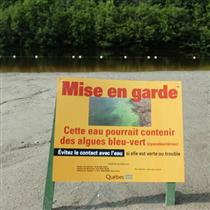
Algues dans Baie Groulx et Baie Yelle!

Ministère de l'environnement confirme que la Baie Groulx (Algue Rouges) et Baie Yelle avaient une prolifération de cyanobactéries

Baie Groulx

Baie Groulx

Baie Groulx

*************
Merci pour les photos/Thanks for the pictures.
Keep them coming!

ATTENTION, ÉLIMINONS LES PHOSPHATES DE CERTAINES PARTIES DU LAC
À TOUS LES INTERESSÉS

SOYEZ INFORMÉS QUE:
Plusieurs observations, nous ont été rapportées à l'effet que des substances qui pourraient être des cyanobactéries auraient été vues dans les baies GROULX et YELLE.

Nous avons avisé le ministère de l'environnement qui, après analyse, nous confirme la présence de cyanobactéries une concentration, qui n'est pas au-délà des normes acceptables. Le ministère nous conseille de demeurer vigilants.

D'autres analyses seront menées de façon régulière et nous vous aviserons immédiatement s'il devait y avoir évolution de la situation.

En attendant et par mesures de sécurité, nous vous invitons à la prudence et nous vous conseillons de ne pas toucher, boire, se laver et même se baigner dans les secteurs visés.

Nous vous rappelons que la municipalité a adopté le 'règlement visant à combattre l'eutrophisation des lacs et des cours d'eau et les risques de prolifération des cyanobactéries' et le règlement limitant l'usage des pesticides en 2007. Ces règlement prévoient des normes qui régissent entre autres:

L'interdiction d'épandre des fertilisants, l'interdiction d'utiliser des détergents contenants du phosphate et surtout l'interdiction d'altérer la végétation herbacée des rives et des milieux humides, dans une bande de 10 mètres de la ligne des hautes eaux.

Dans la mesure oû ces interdictions seront respectées par les citoyens elles permettront de limiter l'apport en phosphore qui est le principal nutriment de la cyanobactérie. Ainsi, nous protégerons nos lacs et nos cours d'eau contre ces manifestations d'algues suspectes qui peuvent survenir à tout moment.

Nous vous invitons à respecter toutes les dispositions de ces règlements et nous vous encourageons fortement à faire vérifier la qualité de vos installations septiques par un technologue professionnel, dans tous les cas oû vous avez le moindre doute sur le bon fonctionnement de celles-ci.

La Municipalité ne peut pas tout faire
Les citoyens doivent faire leur part.

Donné à Lac Simon, ce 5 août 2008

Le Conseil Municipal

par:
Jacques Leblond, avocat, OMA
Directeur général

*************
Plus de 300 km2 de marée rouge dans le fleuve
Carl Thériault
Le mercredi 20 août 2008
Le Soleil
Collaboration spéciale
Rimouski

En moins de deux semaines, la marée d’algues rouges du Saint-Laurent aurait déjà causé la mort d’une cinquantaine de mammifères marins sur les deux rives de l’estuaire et de centaines, voire de milliers d’oiseaux.

Cette masse rougeâtre qui se déplace au gré des vents et des marées est l’objet d’une surveillance de jour en jour par plusieurs spécialistes qui se demandent si elle n’atteindra pas la superbe île Bonaventure ou la baie des Chaleurs dans sa route vers le golfe et l’océan.

Ce phénomène affecte pour le moment le travail d’une cinquantaine d’employés des usines de transformation des mollusques de la Haute-Côte-Nord — interdits de récolte. Les emplois d’une centaine de cueilleurs sont aussi en jeu. PLUS >>>

samedi 2 août 2008

NEF Report: Simms on Climate Change

Rising greenhouse gas (GHG) emissions could pass a critical tipping point and trigger runaway global warming within the next 100 months, according this report.

"We know climate change is a huge problem, but there's a missing ingredient of urgency," said Andrew Simms, policy director at the foundation.

According to the UN's experts, GHG levels in the atmosphere, which are at around 377 parts per million, would have to be stabilised at 400 ppm to avoid a rise of more than 2C.

Indeed, "No Lake is an Island"

- Paul


The final countdown
Time is fast running out to stop irreversible climate change, a group of global warming experts warns today. We have only 100 months to avoid disaster. Andrew Simms explains why we must act now - and where to begin


Andrew Simms
Friday August 1 2008
The Guardian

If you shout "fire" in a crowded theatre, when there is none, you understand that you might be arrested for irresponsible behaviour and breach of the peace. But from today, I smell smoke, I see flames and I think it is time to shout. I don't want you to panic, but I do think it would be a good idea to form an orderly queue to leave the building.

Because in just 100 months' time, if we are lucky, and based on a quite conservative estimate, we could reach a tipping point for the beginnings of runaway climate change. That said, among people working on global warming, there are countless models, scenarios, and different iterations of all those models and scenarios. So, let us be clear from the outset about exactly what we mean. MORE >>>

- Andrew Simms is policy director and head of the climate change programme at NEF - New Economics Foundation. For suggestions for what individuals and groups can do to take action, and links to a wide range of organisations supporting the focus on the 100 months countdown go to: onehundredmonths.org. The Green New Deal can be downloaded: neweconomics.org

vendredi 1 août 2008

Health Canada Report: Climate Change & Water

Outbreaks of E. coli, typhoid and other water-borne pathogens are expected as drinking and recreational water is contaminated by run-off from heavy rainfall - sounds eerily similar; Here are some recent Lac Simon examples:

Baie L'ours blue green algae outbreak in 2005,
12 outbreaks of E-coli on Lac-Simon in July 2007;
Le Petite Nation riviere flooding April 2008;
heavy rainfalls these past 2 weeks in July 2008;
Baie Groulx blue green algae outbreak on July 28...
- Paul


*****

Health Canada report: Diseases, heat-related deaths likely to spike from climate change
Thursday, July 31, 2008
CBC

A new Health Canada report warns Canadians of the potential health risks of climate change, including spikes in heat-related deaths, an increase in respiratory and cardiovascular problems, and the spread and emergence of diseases.

"The findings of this assessment suggest the need for immediate action to buttress efforts to protect health from current climate hazards," says the 500-page report, entitled Human Health in a Changing Climate: A Canadian Assessment of Vulnerabilities and Adaptive Capacity.

It examines the effects under three categories: extreme weather events and natural hazards, air quality and heat, and diseases transmitted by water, food, insects, ticks and rodents.

The projected increase of floods in some areas and drought and forest fires in others are some of the natural disasters caused by climate change that will cause health-related problems, the report says.

As well, a rise in heat waves will be accompanied by an increase in heat-related deaths, the report says, with the greatest risk to cities because of higher population densities and the urban heat island affect.

Those at greater risk are people aged 65 and older, with summer mortality rates projected to be two to three times greater than for those aged 15 to 64, the report says.

Quebecers are singled out in the report, as they are noted for historically being able to adapt well to very cold temperatures "but have not been as successful adapting to extreme heat."

The report also focuses on how the increase in global temperature will affect the air Canadians breathe by increasing smog, wildfires and pollen production.

For example, an increase in the formation of ground-level ozone could lead to more respiratory and cardiovascular problems.

Based on a four degree increase in average temperatures, the report projects 312 more premature deaths each summer because of increase in ozone and a 4.6 per cent or $1.366 billion increase each summer in the health burden to Canadian society related to air pollution.

Climate change may also increase the spread of some infectious diseases, with the increase in temperatures allowing them to survive longer. More rain in some areas and more frequent droughts could increase risks of water contamination and water-bone disease outbreaks, the report warns. MORE >>>

jeudi 31 juillet 2008

Halte: Municipal Negligence, Again?

The proposed parking lot and the damaged stream.

The damaged stream with increased sediment.

The so very obvious culvert.

The mountain water makes it's way to the lake.

Ministère du Développement durable de l'Environnement et des Parcs
Direction régionale de l'Outaouais
98, rue Lois
Gatineau (Québec) J8Y 3R7

RE: Halte Kayak

NO to bulldozer cleared municipal lot.
NO new unmonitored lake access point.
NO to damaged water source.
NO to municipal incompetence.

The Municipality of Lac Simon has allowed a bulldozed to clear a municipal owned lot that lies along chemin Tour-du-Lac, between Point a Mousseau and Cap Manitou. The work was done in May, prior to the BMR Velo tour de lac. As the lot was cleared, a water source that empties into Lac Simon was needlessly damaged.

A short but proper visual survey of the land before handing out the work permit would have revealed the stream. There is even a culvert for the water under chemin Tour-du-Lac. The municipal authorities should then have directed the bulldozer to leave a natural buffer that would have respected the water source.

Perhaps. But with a proper survey, and the resultant buffer, the lot would NOT have been cleared as it would have been TOO SMALL!

The Municipality of Lac Simon should have surveyed the land. The Municipality should not have allowed the workers to damage the water source. (same pattern of negligence as destruction of Ile Canard Blanc)

Why was the municipal lot cleared? …To make way for parking and toilets for the proposed Le Petite Nation kayaking route. The municipality is damaging a water source into the very body of water that environmentally conscious kayakers will paddle. Too funny!

Even more hilarious (and sadly ironic) is the fact authorities are so trying to increase tourism to Lac Simon; increased tourism means greater revenues for Cheneville businesses; but the pollution of Lac Simon will not only deflate the evaluations of the lake front owners but also ruin the very tourism the authorities are trying to promote.

Got to love the irony. Got to love the incompetence!

There must be a Responsibility to Protect: Water.

…Oh yeah, I almost forgot. The chemin Tour-du-lac sector, adjacent to proposed Halte Kayak, has been fighting the new unmonitored lake access point since May. They have sent a registered letter against the project with over 60 signatures.

Sincerely,

Paul Malouf

CC: Norm MacMillan, Député de Papineau
Ghislain Ménard, Directeur Général MRC Papineau
Richard Charlebois, Directeur Général Centre Local de Dévelopment
Association des Propriétaires du Lac Simon

mardi 29 juillet 2008

Rock Walls: How Big is Too Big?


*************
Merci pour les photos/Thanks for the pictures.
Keep them coming!

Ministère du Développement durable, de l'Environnement et des Parcs
Centre de contrôle environnemental de l'Outaouais
98, rue Lois, Gatineau (Québec) J8Y 3R7

These photos were supplied to me by a concerned citizen.

How big do rock walls need to be?

Paul

lundi 28 juillet 2008

Transport Canada: 70 km/h Speed Limits on Lac Simon

Merci a / Thanks to
Bureau de la sécurité nautique / Office of boating safety
Transports Canada - Sécurité maritime / Transport Canada - Marine Safety

Vessel Operation Restriction Regulations
Canada Shipping Act, 2001

Transport Canada "speed limits" & "permits"
...include Lake Simon


SCHEDULE 6: WATERS ON WHICH POWER-DRIVEN VESSELS AND VESSELS DRIVEN BY ELECTRICAL PROPULSION ARE SUBJECT TO A SPEED LIMIT (Part 3) Article 191.

(a) within 70 m of the high water mark; and 25 km/h
(b) at more than 70 m from the high water mark 70 km/h

SCHEDULE 8: WATERS FOR WHICH A PERMIT IS REQUIRED TO HOLD A SPORTING, RECREATIONAL OR PUBLIC EVENT OR ACTIVITY (Part 3) Article 78.

**********
As written in Section 12(1)an 12(2) of the Vessel Operation Restriction Regulations (VORR), Transport Canada gives out the permit:

"12(1) The Minister may issue a permit that authorizes a person to hold a sporting, recreational or public event or activity in the waters described in Schedule 8 and that sets out conditions

(a) to minimize risk to the safety of persons and interference with the safe and efficient navigation of vessels; and

(b) to protect the public interest


"12(2) The Minister may issue a permit authorizing a person to hold, in the waters described in subsection 2(7) or in Schedule 5 or 6, a sporting, recreational or public event or activity during which vessels will be operated at a speed that exceeds the maximum speed prescribed by these Regulations in respect of those waters, and that sets out conditions

(a) to minimize risk to the safety of persons and interference with the safe navigation of vessels; and

(b) to protect the public interest.

**********
See previous letter/photo gallery:
"Poker Run": A Fun Time with Obvious Safety Concerns?

**********
Questions
Is the Municipality of Lac Simon, Maire Serge Thivierge and its councillors Michel David, Don Saliba, Jean Guy Maillé, Jocelyn Boisvert, Nelson Barnes, Reina Laniel supporting an inherently illegal activity by passing an exemption for the "poker run " that contravenes previous bylaw(s) enacted by the municipality and recognized by Transport Canada in the Canada Shipping Act, 2001?

Why does the Sûreté du Québec not enforce Transport Canada's recognized 70 km/h speed limit?

Do event organizers and/or municipality need event insurance?

**********
And from the Municipality de Lac Simon web site
Règlement concernant les limites de vitesse sur les lacs


dimanche 20 juillet 2008

"Poker Run": A Fun Time with Obvious Safety Concerns?

Update, (August 5): It appears that citizens and event organizers have come to an 'agreement' on the future of the "poker run" following a heated discussion during the municipal council meeting on August 1; not withstanding the absence of the Maire and lack of municipal leadership. The longest serving municipal councilor, Michel David, pleaded ignorance of Transport Canada's permit requirement(s) even though both he & Maire were on municipal council when town adopted the speed limit laws for the lake. Too funny!
*****

M. Jacques P. Dupuis
Ministère de la Sécurité publique
2525, boulevard Laurier, 5e étage
Tour des Laurentides
Québec (Québec) G1V 2L2

RE: “poker run”

The annual “poker run” was held on Saturday July 19, 2008. It looks like a fun event.

Although I am not against the concept of a “poker run”, I do have several concerns:

Planning: Having between 40 and 50 boats, with about twenty 30 to 40-foot “cigarette” boats, from outside the municipality of Lac-Simon visit the lake for a July construction holiday weekend is not good planning on the part of neither the event organizers, nor the municipality. I would argue that there is a limit for any lake in terms of quantity, size, and speed of boats. Moreover, this should not be held in July.
Friday night marina arrival.

Saturday morning pre-race.

Safety: The municipal council and the Maire of Lac-Simon, Serge Thivierge, must have as their priority - safety. Most of the 1550 homeowners refrain from venturing onto the lake during the event. Boats at speeds of upwards 100km/hr is a clear and present danger. These 30 to 40-foot “cigarette” boats are made for the "ocean", not inland lakes.
Boat returning to finish line.

Boat returning to finish line.

Boats returning to finish line.

Boat, with large wake, driving past marina, at faster than necessary speeds?

Children Safety
: Children were forced out of the water at the start when 40 to 50 boats left the bridge going north towards Duhamel. The 2 to 3-foot wakes were a clear and present danger to small children playing in the water.

Blocking Bridge traffic: The start area was at the bridge. Boats that were lined up for the start were blocking access to the bridge. Boats coming from Lac-Barriere were forced to weave their way through the maze of stationary “poker run” boats. (see bridge photo) Boat traffic under the bridge must never be blocked.

Boats gathering at start. Why block the bridge?

Helicopter
: A helicopter was filming the event. (see video - coming soon) Helicopters hovering 10 feet over the water and boaters, mere meters away from beaches with children, the tree line and homes is a clear and present danger. Was the municipal aware of the helicopter beforehand? Was a municipal permit issued? What are the Transport Canada laws of flying a helicopter at that altitude for such a superfluous event?

Helicopter appearing from Baie Blais, then filming the 50 boats the length of the 10 km long section of the lake, at about 20 feet above water along the shoreline.


Police: There should be a police presence that follows the event in its present state. The regular QPP boat that was on the lake the day after, on Sunday July 20, 2008 must be on the lake during the event. The 2 “seadoos” that were on the lake Saturday July 19 are no match for the over twenty 30 to 40-foot boats that speed up to 100km/hr. Did the municipality request a regular QPP boat during the “poker run”?

Municipal exemptions: I would argue that a majority of citizens of Lac-Simon (80-90%) are against the exemptions the municipality of Lac-Simon gave for this specific event:
  • 30-foot maximum is waived
  • $100.00 entry fee for boats between 22 & the maximum allowed 30 is reduced to $15.00.
  • Boats longer than 30-feet are allowed for the weekend, some entering Friday night; others not leaving till to Monday evening.

Citizen happiness: I would argue that at least 80-90% of the lakefront homeowners are against the “poker run”.

Economic benefits: I would argue that there is little economic benefit for the businesses of the municipalities of Cheneville or Lac-Simon.

Boat with "rooster tail" near shoreline on Saturday night.

Boat with rooster tail on Sunday night. What's the point?


Municipal vision: I would argue that the MRC Papineau and Municipality vision of creating a “kayaking” route along the Petite Nation and Lac-Simon is inconsistent with the “poker run”. 40-foot boats at 100km/hr with 2 to 3-foot wakes are a clear and present danger to kayakers, and other small craft. They are inconsistent.
Saturday evening beach rendez-vous; Looks like a good time!

Environment: The shoreline is being damaged with increased erosion by the huge waves, especially at the start when 50 boats leave the bridge/marina going north all at the same time.

Water pollution: Homeowners have complained that the water line of their boats are filthy the day after the "poker run"; probably because of the excessive high octane gasoline of some of the larger boats.

Noise Pollution: Because some boats do not have mufflers or switch them off, just one boat interrupts a conversation on a deck and leads to window closure. The noise is revolting.

*****
Thus, I request that the municipality of Lac-Simon:
  • legislate a 70 km/hr maximum speed limit for Lac-Simon; Advise Transport Canada of the new law; Have the police enforce such a speed limit;
  • stop giving fee access exemptions. All boats entering the waters of Lac-Simon must have there boat cleaned ($15.00) and pay the entrance fee (under 22 feet = $25.00; between 22 & 30 feet = $100.00) as the municipal bylaws require;
  • enforce a complete 100% ban on boats greater than 30 feet from entering of Lac-Simon.
  • legislate that exhaust mufflers be mandatory on all boats.

A poker run could continue, just respect the aforementioned parameters.

Thanking you in advance.

Sincerely,

Paul Malouf

CC: Sûreté du Québec
Norm MacMillan, Député de Papineau
Ghislain Ménard, Directeur Général de MRC Papineau
Association des Propriétaires du Lac Simon

samedi 19 juillet 2008

Lac-Simon Veut Fermer Centre Toxicomanes

Update (July 20): As of July 20, the petition continues and is approaching 800 signatures.

Take Action => GO TO & SIGN PETITION


Lac-Simon veut fermer le centre de ressourcement pour toxicomanes et alcooliques
Jessy Laflamme
le 19 juillet 2008
Le Petite Nation

La municipalité de Lac-Simon entame des démarches judiciaires afin que l’Auberge Évasion, devenue un centre de ressourcement pour les toxicomanes et alcooliques depuis janvier dernier, ferme ses portes.

L’organisme Alliance/Cap Espoir opère plusieurs bâtiments du même genre au Québec. Il a établi, dans l’Auberge Évasion, un centre de ressourcement pour les personnes qui font face à des problèmes d’alcoolisme ou de toxicomanie. «Seulement les personnes qui ont subi une thérapie peuvent venir ici, a indiqué la coordonnatrice du centre, Sophie Cusson. De plus, aucune substance qui alterne le cerveau n’est tolérée sauf les médicaments prescrits par les médecins.»

Selon Mme Cusson, l’Auberge Évasion n’est pas un centre de désintoxication, mais bien un centre de ressourcement. «Les 22 personnes qui sont ici le sont pour renouer les liens avec leur famille et pour faire un retour dans la société», a-t-elle affirmé. PLUS >>>

jeudi 26 juin 2008

Une pétition de 615 noms à Lac-Simon

Take Action => GO TO & SIGN PETITION

Update (June 29): Photo taken morning of Lac-Simon property association meeting, Sunday June 29 at 10:15 am. It seems the SQ are still being called to the Auberge Evasion.

POUR L'ARRÊT DES ACTIVITÉS D'UNE MAISON DE RÉINSERTION SOCIALE POUR ADULTES
Une pétition de 615 noms à Lac-Simon
Yves Soucy
Le jeudi 26 juin 2008
Le Droit

Le Comité de vigilance des propriétaires du lac Simon, dans la Petite-Nation, a déposé à la municipalité, hier, une pétition de 615 signatures exigeant l'arrêt immédiat des activités d'une maison de réinsertion sociale pour adultes qui opère dans le local qui abritait jadis l'auberge Évasion.

Depuis plusieurs mois, les activités du centre de réhabilitation sèment l'inquiétude chez les résidants qui craignent pour leur sécurité et celle de leurs enfants. La pétition mentionne que les personnes qui habitent au centre circulent librement sans surveillance et que les piétons hésitent à marcher seul dans le secteur.

La municipalité de Lac-Simon somme d'ailleurs le propriétaire de l'ancienne auberge Évasion de se conformer au règlement de zonage, soit en mettant fin aux activités de la maison de réinsertion, soit en demandant une modification au même règlement qui permettrait un tel usage dans l'édifice du chemin Tour du lac. PLUS >>>

mercredi 25 juin 2008

Stephen Harper: Get us out of dead zones

Tell Harper to get out of the Dead Zone!

It’s time to protect Canadian lakes, rivers and oceans from hazardous algae blooms. Tell Prime Minister Stephen Harper to get Canada out of the dead zone and make Canada to take the turn towards more ecologically sustainable agricultural policies and practices by reducing the excessive use of agricultural fertilizer and adopting the recommendations of the UN-World Bank report on agriculture (IAASTD report).


Right Hon. Stephen Harper Prime Minister
Office of the Prime Minister
80 Wellington Street
Ottawa K1A 0A2
Fax: 613-941-6900
Email: pm@pm.gc.ca


Dear Right Hon. Prime Minister Stephen Harper

I am very concerned about algae blooms in our rivers, lakes and oceans caused by excessive use of agricultural fertilizers and the health and environmental threats to our water. Canada must be a leader in adopting agricultural policies and practices towards an ecologically sustainable agriculture.

Since records began in 1950, nitrogen fertilizer production in Canada has increased about 75-fold. In Canada, the agricultural sector is responsible for about 82 per cent of the phosphorus and 49 per cent of the direct nitrogen pollution, mostly through run-off from fertilized soils and livestock farming.

Canada has the highest per cent increase in fertilizer use across the OECD. Both nitrogen and phosphorus surpluses grew respectively by 85 per cent and 123 per cent between 1990-1992 and 2002-2004.

I demand that your government immediately:

  1. Adopt a plan to reduce agricultural fertilizer use with specific targets and deadlines;
  2. Endorse, adopt and implement the recommendations of the recent United Nations and World Bank led assessment of global agriculture towards ecologically sustainable agricultural policies and practices.

Thank you very much for your prompt attention into this important matter.

Paul Malouf
(source: Greenpeace Canada)

* * * * * * * * * * * * * *

CC: Leaders of the Oppositions Parties

Liberal Party: Hon. Stéphane Dion, House of Commons, Ottawa, Ontario K1A 0A6
Tel.: (613) 996-5789; Fax: (613) 996-6562; Email: DionS@parl.gc.ca

Bloc Québécois: Hon. Gilles Duceppe, House of Commons, Ottawa, Ontario K1A 0A6
Tel.: (613) 992-6779; Fax: (613) 954-2121; Email: Duceppe.G@parl.gc.ca

New Democratic Party: Hon. Jack Layton, House of Commons, Ottawa, Ontario, K1A 0A6
Tel: (613) 995-7224; Fax: (613) 995-4565; Email: Layton.J@parl.gc.ca

jeudi 19 juin 2008

La qualité de l'eau des plages scrutée

La qualité de l'eau des plages scrutée à la loupe cet été
Daniel LeBlanc
le 18 juin 2008
Le Petite Nation

Le ministère du Développement Durable, de l'Environnement et des Parcs (MDDEP) a annoncé, ce mercredi, que le programme Environnement-Plage, qui vise à informer les citoyens de la qualité bactériologique des eaux de baignade des principales plages, est maintenant débuté pour la région de l'Outaouais.

Au total, pour la saison estivale 2008, 16 plages de la région seront analysées régulièrement par la Direction régionale du Centre de contrôle environnemental du Québec du MDDEP.

Quatre de ces plages sont situées à Gatineau, soit celles de la marina d'Aylmer, du parc Moussette, du parc du Lac-Beauchamp et du parc du Lac-Leamy. Les douze autres sont situées à Duhamel, Gracefield, La Pêche, Lac-Simon, Low, Otter Lake, Pontiac, Grand-Remous et Val-des-Monts. Les plages échantilonnées doivent être publiques et sécuritaires pour pouvoir participer au programme. PLUS >>>

mercredi 18 juin 2008

Usine de Traitement des Matières Résiduelles?

La MRC Papineau veut créer une usine de traitement des matières résiduelles
Des études permettront de vérifier la faisabilité du projet
le 18 juin 2008
Le Petite Nation

La MRC Papineau étudiera au cours des prochains mois la possibilité de construire une usine de traitement des matières résiduelles et de valorisation thermique à Thurso. Le projet, s'il est réalisable, apporterait de nombreux bénéfices aux 24 municipalités de la MRC Papineau, selon son préfet, Paulette Lalande.

Selon Serge Thivierge, président du comité de suivi du Plan de gestion des matières résiduelles de la MRC Papineau, le projet semble prometteur. «Le projet vise éventuellement de pouvoir implanter une usine de traitement des matières résiduelles qui permettrait de valoriser à des fins énergétiques 54 000 tonnes de matières résiduelles dont 14 000 proviendraient de notre MRC», explique-t-il. PLUS >>>

samedi 17 mai 2008

L'ile Canard Blanc Development - Municipal Incompetence?

"Any law which violates the inalienable rights of man is essentially unjust and tyrannical; it is not a law at all."

-- Maximilien Robespierre

"Any law which violates the inalienable rights of the environment is essentially unjust and tyrannical; it is not a law at all."

--me

Spring 2008 - L'ile Canard Blanc Development

New septic tank & weeping field are under water.
Photos taken May 3, 2008.

Home 1: Water has penetrated behind the house under construction. Septic tank & weeping field are under water.


Home 2
: High spring water has surrounded yet a second home. Septic tank & weeping field are under water.


Ministère du Développement durable de l'Environnement et des Parcs
Direction régionale de l'Outaouais
98, rue Lois
Gatineau (Québec) J8Y 3R7

RE: Ile Du Canard Blanc - Les Chalets du Manoir Housing development

The Municipality of Lac Simon granted the developer the right to develop all the lots as they were surveyed in 1926. Thus lot #60 is at 10,350 sq/ft, lot #52 is at 11,407 sq/ft and lot 61 is at 12,000 sq/ft. The biggest lot, lot 28 is at 30,000 sq/ft. Remember there are 60 lots for sale.

These lots are too small. Hence the septic tanks & weeping fields are not far enough back, on higher ground.

The maire of Lac-Simon, Serge Thivierge and Building and Environmental Officer, Guy Roy should have said to the developer, "Go ahead with the purchase of the 60 lots from mr. Archambault, but the municipalité de Lac-Simon will authorize lots of only 44,000 sq ft." There must be a Responsibility to Protect: Environment.

Hence the developer would have re-surveyed the land in 2006. The developer would then have payed a price based on a housing development with 44,000 sq ft lots and not 10,000 sq ft lots.

I argue that it is incompetent to do otherwise in 2006/7.

With 12 cases of e-coli in the lake in the summer of 2007, are we not going backwards?
See August 9, 2007 post E. coli au lac Simon.

Sincerely,

Paul Malouf

CC: Norm MacMillan, Député de Papineau
Jean Perreault, Coordonnateur du service de la planification et de l'aménagement de MRC Papineau
Association des Propriétaires du Lac Simon


For August 5, 2007 letter warning of dangers & pics
Letter/Photo Gallery: Destruction Environmentale ou "Droit Aquis"?
+
For September 18, 2007 barge pics & "ordre de détention" by Transport Canada
Photo Gallery: L'ile Canard Blanc & illegal barge
+
For October 22, 2007 Québec ministre de l'Environnement letter
Lettre/photo gallery: Proteger la Grande Plage de Canard Blanc


Here is a photo of Home 2, under construction, summer 2007
************
????Questions????

How many more homes will be built on the island by the developer with septic tanks & weeping fields under spring water?
How is this situation going to be remedied?
Who is going to protect the waters of Lac-Simon?

vendredi 16 mai 2008

Activités louches qui se tiennent à l’auberge “Evasion”

Update - 615 signatures (online & hard copy) as of June 25, 2008. Petition has been submitted to Municipality of Lac-Simon today. A follow-up with more signatures will be submitted in September. Thanks for signing. Thanks for new signatures. Paul
*************

Take Action => GO TO & SIGN PETITION

PETITION
Municipalité de Lac Simon
849, chemin Tour du lac,
Lac Simon J0V 1E0
a/s Directeur général

c.c. MRC a/s Secrétaire
Deputé provincial
Deputé fédéral
Association des propriétaires du Lac Simon
Agent régional soins et services de santé de l’Outaouais

Activités louches qui se tiennent à l’auberge “Evasion”, 544 Chemin Tour du lac dans la municipalité de Lac Simon en Outaouais.

Attendu que les pensionnaires désoeuvrés circulent librement sans surveillance seul ou en groupe.

Attendu que des véhicules de transport adapté et auto-patrouilles de la Sureté du Québec créent un va-et-vient fréquent.

Attendu que les résidants sont inquiets pour leurs enfants, pour eux-mêmes et pour leurs biens.

Attendu que les piétons hésitent à marcher seul dans le secteur.

Attendu que les propriétaires pourraient subir une baisse de la valeur de leur résidences reliée à la présence d’individus non désirés.

Nous, les résidants de la municipalité de Lac Simon et de la région, exigeons l’arrêt immédiat d’un genre d’exploitation non conforme à celui d’une auberge.

GO TO & SIGN PETITION

Comité de vigilance des résidants du Lac Simon
petitionlacsimon@hotmail.com

Inquiétude chez le résidants de Lac-Simon

Inquiétude chez le résidants de Lac-Simon
Yves Soucy
Le jeudi 10 avril 2008Le Droit

La transformation de l'ancienne auberge Évasion, à Lac-Simon, en une maison de réinsertion sociale pour les adultes qui font face à des problèmes sérieux d'alcoolisme ou de toxicomanie, sème l'inquiétude chez certains citoyens.

Sans même que la municipalité en soit informée, l'organisme Alliance/Cap Espoir, qui opère trois maisons du même genre dans la région montréalaise, a obtenu le mandat du ministère de la Justice d'implanter un centre similaire dans la Petite-Nation. PLUS >>>